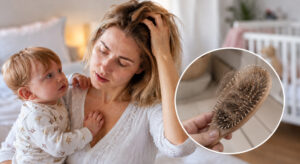
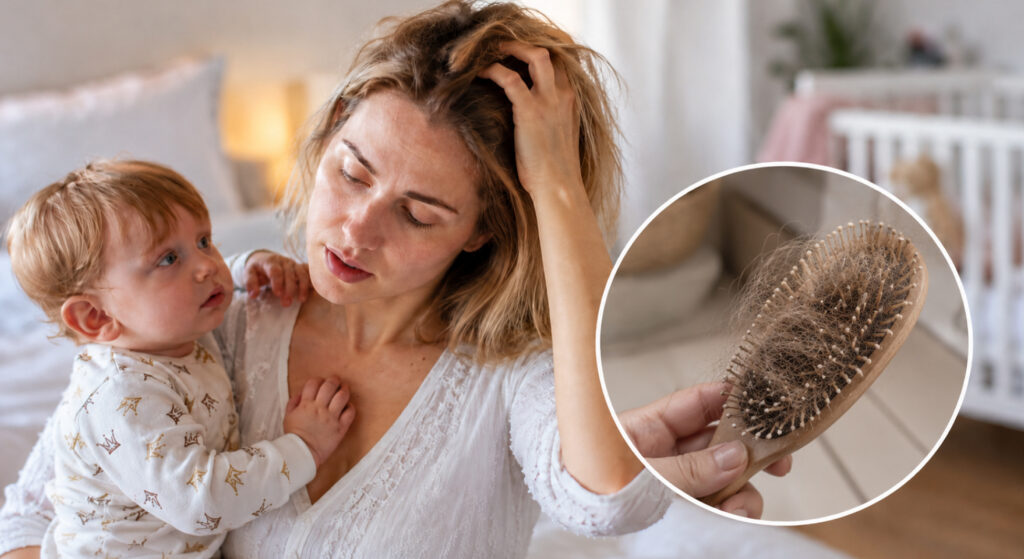
Hair loss after pregnancy is a common concern for new mothers. Many women notice increased shedding in the shower, on their pillow or when brushing their hair during the first few months after giving birth. This is often called postpartum hair loss or postpartum shedding.
Although it can be worrying, postpartum hair loss is usually temporary. Understanding why it happens, how long it lasts and when to seek professional advice can help you feel more informed and reassured.
 Why Does Hair Loss Happen After Pregnancy?
During pregnancy, hormonal changes, particularly increased oestrogen levels, can keep more hairs in the active growth phase for longer. This is why some women notice thicker, fuller-looking hair while pregnant.
After delivery, hormone levels gradually change and oestrogen levels fall. Hair that was kept in the growth phase during pregnancy may then enter the resting phase of the hair cycle. Several weeks or months later, these hairs shed.
This process is called telogen effluvium, also known as postpartum alopecia. It is a type of temporary, diffuse hair shedding that can occur after childbirth, illness, surgery, significant weight loss or other physical stress.
Postpartum shedding is not usually caused by breastfeeding itself. Instead, it is mainly linked to the hormonal and physical changes associated with pregnancy and childbirth. Sleep deprivation, emotional stress, blood loss during delivery and nutritional deficiencies may also contribute to increased shedding in some women.
How Much Hair Shedding Is Normal?
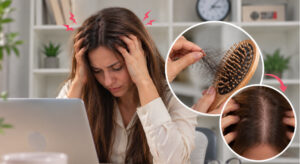
It is normal to lose some hair every day, but postpartum shedding can make the amount appear much greater. You may notice:
- More hair coming out during washing or brushing
- Hair collecting on clothing, bedding or bathroom surfaces
- Overall thinning rather than clearly defined bald patches
- Reduced volume around the temples or hairline
- A thinner-looking ponytail
- Increased visibility of the scalp
Postpartum hair loss commonly becomes noticeable around two to four months after delivery, although timing can vary. The shedding may appear sudden and dramatic, but it does not usually mean that the hair follicles have been permanently damaged.
However, very severe shedding, bald patches, scalp irritation or hair loss that continues to worsen should not automatically be attributed to postpartum changes.
When Does Postpartum Hair Loss Stop?
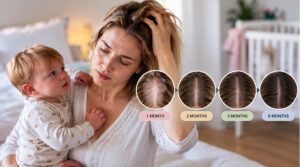 For many women, postpartum hair shedding gradually improves within several months. Hair growth may begin to stabilise around six months after childbirth, although returning to the previous level of thickness can take longer.
Complete recovery may take approximately six to twelve months, and sometimes longer depending on genetics, general health, nutrition and whether another type of hair loss is present.
New regrowth may appear as short, fine hairs around the hairline. These can be especially noticeable around the temples and forehead. Although these hairs may look uneven at first, they can be a normal sign of recovery.
If your hair does not appear to be recovering after the first year, or if thinning is concentrated around the parting, temples or crown, a specialist assessment may be useful.
What Can Help Postpartum Hair Loss?
Nutrition and Balanced Meals
A balanced diet supports normal hair growth. Try to include adequate protein, iron-rich foods, fruit, vegetables and healthy fats.
Iron deficiency, low vitamin D, thyroid problems and other nutritional or hormonal issues can contribute to hair shedding. If you are experiencing significant hair loss, a healthcare professional may recommend blood tests based on your symptoms and medical history.
Avoid taking high-dose hair supplements without advice, particularly while breastfeeding. More of a vitamin or mineral is not always better, and some supplements may be unsuitable during this period.
Gentle Hair Care
While your hair is shedding, handle it gently. Helpful measures include:
- Avoiding tight ponytails, braids and extensions
- Limiting frequent heat styling
- Using a wide-tooth comb
- Avoiding vigorous brushing
- Choosing gentle shampoos and conditioners
- Avoiding harsh chemical treatments if the scalp is sensitive
These steps will not stop the hormonal hair cycle, but they may reduce breakage and prevent additional traction-related damage.
Minoxidil
Minoxidil is a treatment used for certain types of hair loss, including female pattern hair loss. It may sometimes be considered when shedding is prolonged or another diagnosis is identified.
However, minoxidil is not automatically appropriate for postpartum hair loss, especially during pregnancy or breastfeeding. Anyone considering topical or oral minoxidil should discuss the risks, benefits and timing with an appropriately qualified healthcare professional.
When Should You See a Hair Loss Specialist?
 Arrange an assessment if:
- Hair loss is severe or rapidly worsening
- You develop smooth or clearly defined bald patches
- Your eyebrows or eyelashes are also thinning
- You have scalp pain, redness, scaling or inflammation
- Shedding continues without improvement
- Your hair remains noticeably thin more than twelve months after delivery
- You have symptoms such as fatigue, dizziness, weight changes or feeling unusually cold
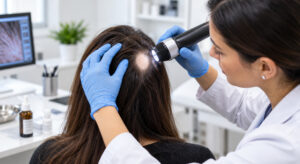
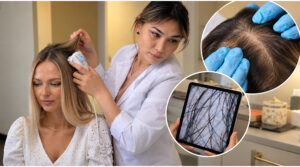
At The Hairology Centre, a consultation may include a detailed medical history, scalp examination and trichoscopic assessment. This can help distinguish postpartum shedding from female pattern hair loss, alopecia areata, nutritional problems or other conditions.
Book your hair loss consultation today to understand the cause of your shedding and explore suitable treatment options.
For more on the causes and types of hair loss, visit our hair loss guide.
Frequently Asked Questions
Is Hair Loss After Pregnancy Permanent?
Usually, postpartum hair loss is temporary and hair gradually regrows as the hair cycle returns to normal. However, some women may also have female pattern hair loss or another condition that becomes more noticeable after pregnancy. Persistent thinning should be assessed rather than assumed to be normal postpartum shedding.
Can Breastfeeding Cause Hair Loss?
Breastfeeding itself is not usually considered the direct cause of postpartum hair loss. The main trigger is the hormonal change after childbirth. However, breastfeeding can increase nutritional demands, and inadequate calorie, protein, iron or fluid intake may contribute to poor hair health in some women.
What Is the Difference Between Postpartum Hair Loss and Female Pattern Hair Loss?
Postpartum hair loss usually causes diffuse shedding across the scalp and often begins a few months after delivery. Female pattern hair loss is usually more gradual and may cause widening of the central parting, reduced density at the crown or increased scalp visibility. Both can occur together, so professional assessment may be needed.
Should I Take Hair Vitamins After Pregnancy?
Not necessarily. Hair vitamins are not a universal treatment for postpartum shedding. A balanced diet is important, and supplements should be guided by a healthcare professional if a deficiency is suspected. This is particularly important during breastfeeding.
Medical note: Postpartum hair shedding is common, but persistent, severe or patchy hair loss should be assessed. Prescription treatments should only be considered following an appropriate clinical review.