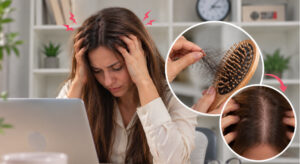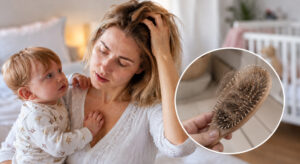
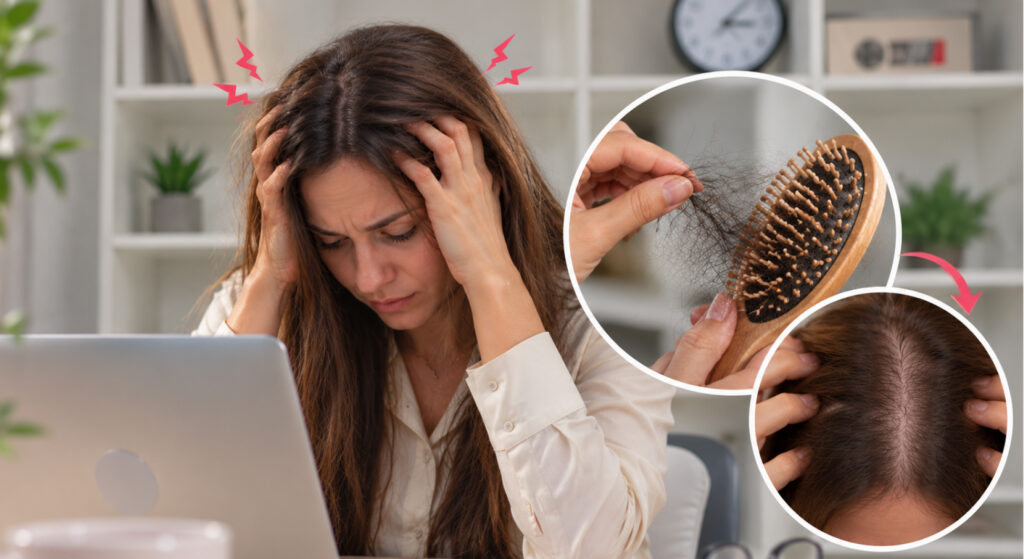
Stress can affect many parts of the body, including the hair growth cycle. If you have noticed more hair falling out after a difficult period, illness, major life change or prolonged pressure, stress-related hair loss may be one possible explanation.
The most common type is called telogen effluvium. Although it can be alarming, it is often temporary. Understanding how stress affects hair, how long recovery may take and when to seek professional advice can help you take the next step.
How Does Stress Cause Hair Loss? Telogen Effluvium Explained
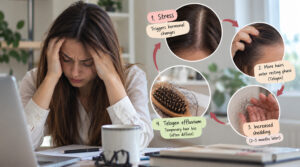 Hair naturally moves through three stages: growth, transition and resting. During the resting phase, the hair eventually sheds to make room for new growth.
A significant physical or emotional stressor can disrupt this cycle and cause more hairs than usual to enter the resting phase. Around two to three months later, these hairs may begin shedding. This condition is known as telogen effluvium.
Stress-related hair loss usually causes diffuse shedding across the scalp rather than clearly defined bald patches. You may notice:
- More hair in the shower or hairbrush
- Hair collecting on pillows or clothing
- A thinner ponytail
- Increased scalp visibility
- Overall reduction in hair volume
The delay between the stressful event and the shedding can make it difficult to identify the original trigger.
Physical vs Emotional Stress Triggers
Both physical and emotional stress may contribute to telogen effluvium.
Physical stress triggers
These may include:
- High fever or significant illness
- Surgery or hospitalisation
- Rapid weight loss
- Restrictive dieting
- Iron deficiency or other nutritional problems
- Major hormonal changes
Emotional stress triggers
Examples may include:
- Bereavement
- Relationship difficulties
- Work-related pressure
- Financial worries
- Anxiety
- Poor sleep over a prolonged period
Not everyone who experiences stress develops hair loss. Other factors, including genetics, nutrition, existing hair conditions and general health, may influence how the hair responds.
How Long Does Stress-Related Hair Loss Last?
Stress-related hair loss is often temporary, but recovery is gradual. Shedding may continue for several weeks or months after the original trigger has improved.
In many cases, the hair cycle begins to stabilise within three to six months. Visible regrowth may take longer, and restoring previous hair density can require six to twelve months or more.
The time needed for recovery depends on whether the stressor has been resolved and whether another cause of hair loss is present. Ongoing stress, low iron levels, thyroid problems or a family history of hair loss may trigger female pattern hair loss or male pattern hair loss.
Short, fine hairs around the hairline can be a sign of new growth. However, persistent thinning should be assessed rather than assumed to be stress-related.
What Helps Stress-Related Hair Loss?
 Address the underlying cause
Where possible, identify and address the factor contributing to stress. Improving sleep, seeking emotional support, managing workload and speaking with a healthcare professional may all be helpful.
Stress management does not guarantee immediate hair regrowth, but it may support overall wellbeing and help prevent continued disruption to the hair cycle.
Focus on nutrition
Hair growth requires adequate energy, protein and essential nutrients. Include a balanced diet containing:
- Protein-rich foods
- Iron-containing foods
- Fruit and vegetables
- Whole grains
- Healthy fats
If shedding is significant, a clinician may consider blood tests for issues such as iron deficiency or thyroid problems. Avoid taking high-dose supplements without professional advice.
Gentle hair care
Use gentle shampoos, avoid excessive heat styling and minimise tight hairstyles that pull on the hair. These measures will not directly stop telogen effluvium, but they can reduce breakage and additional mechanical stress.
Treatment options
Minoxidil may be considered in selected cases, particularly if another condition such as female pattern hair loss or male pattern hair loss is also present. It is not suitable for everyone, including some people who are pregnant or breastfeeding, so treatment should be discussed with an appropriately qualified professional. Our guide to the best hair loss treatment in the UK explains the main options in more detail.
When Should You See a Hair Loss Specialist?
 Arrange a specialist assessment if:
- Hair loss is severe or rapidly worsening
- Shedding continues for several months without improvement
- You develop smooth bald patches
- Your eyebrows or eyelashes are thinning
- Your scalp is painful, red, itchy or inflamed
- You have fatigue, dizziness, weight changes or other symptoms
- Hair density does not recover as expected
At The Hairology Centre, a consultation may include a detailed medical history, scalp examination and trichoscopic assessment. This can help distinguish telogen effluvium from alopecia areata, female pattern hair loss, nutritional deficiencies and other conditions.
Book your hair loss consultation today to understand the cause of your shedding and explore suitable treatment options.
For more on the causes and types of hair loss, visit our hair loss guide.
Frequently Asked Questions
Can Stress Cause Permanent Hair Loss?
Stress-related telogen effluvium is usually temporary and does not permanently destroy the hair follicles. However, prolonged shedding may trigger an underlying condition such as female pattern hair loss. Persistent or patchy hair loss should be professionally assessed.
How Quickly Does Hair Grow Back After Stress Hair Loss?
Shedding may improve within three to six months after the trigger has resolved. Visible regrowth and restoration of hair density can take six to twelve months or longer. Hair grows slowly, so recovery is rarely immediate.
Can Stress Cause Alopecia Areata?
Stress may act as a trigger for alopecia areata in some people, but alopecia areata is an autoimmune condition rather than simply a result of stress. It usually causes smooth, clearly defined patches of hair loss and requires a different assessment from telogen effluvium.
How Can I Tell If My Hair Loss Is Caused by Stress?
Stress-related hair loss commonly causes diffuse shedding across the scalp, often beginning two to three months after a stressful event. However, the pattern alone cannot confirm the diagnosis. A medical history and scalp assessment may be needed.
Medical note: Hair loss has many possible causes. Prescription treatments should only be considered following an appropriate clinical assessment.