
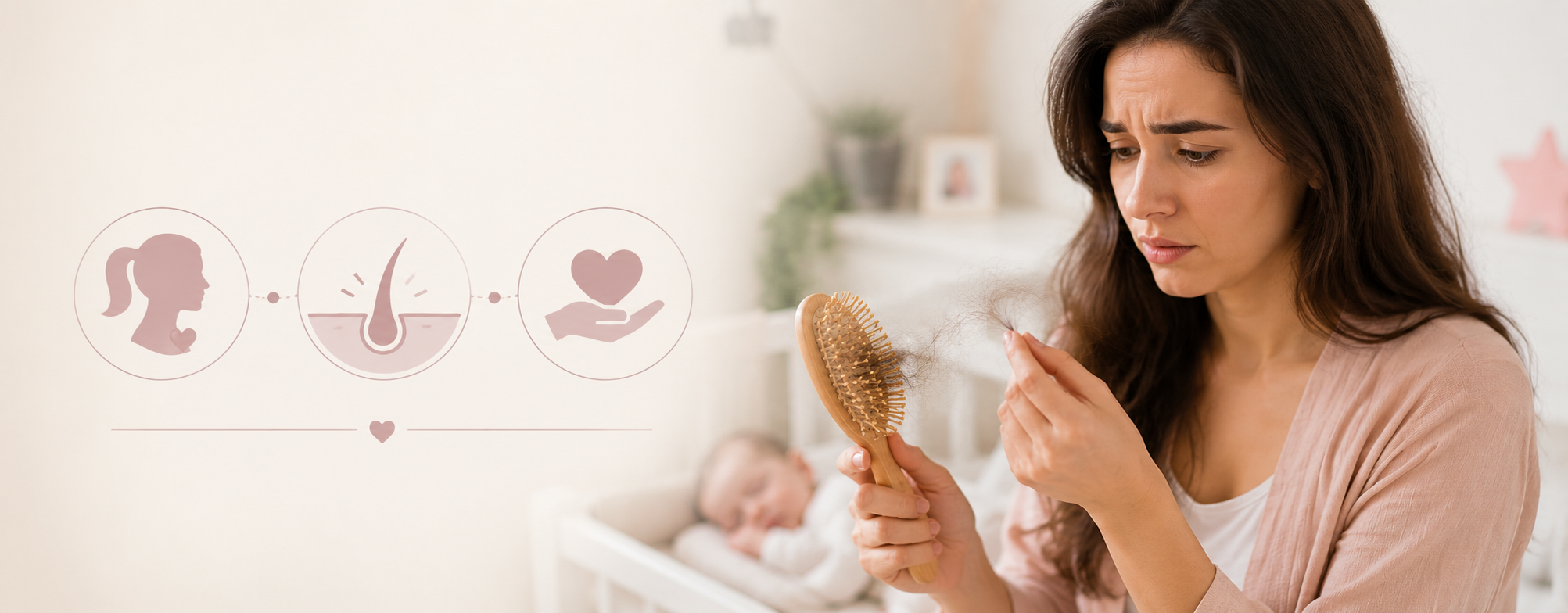
It can be worrying to notice more hair coming out than usual a few months after having a baby, particularly when you’re already coping with the demands of a newborn. The good news is that postpartum hair loss is very common and, for most women, temporary.
This blog explains why it happens, how long it typically lasts, and what you can do to support healthy hair regrowth.
Why Does Postpartum Hair Loss Happen?
Postpartum hair loss is a temporary increase in shedding that occurs after pregnancy, affecting around 40 to 50 per cent of new mothers to some degree. It happens because hormone levels change rapidly after childbirth, pushing more hairs than usual into the resting (telogen) phase before they shed together. It’s a normal part of the hair growth cycle, not a sign that anything is wrong.
How Hormonal Changes Cause Hair Loss After Birth
During pregnancy, high oestrogen levels extend the hair’s growth phase, which is why so many women notice thicker, glossier hair than usual while expecting. That changes almost overnight after delivery, as oestrogen drops sharply, and this hormonal imbalance and hair loss connection triggers a large number of hairs to shift into the shedding phase together, a condition known medically as telogen effluvium.
When Does It Start and How Long Does It Last?
Shedding usually begins around two to four months after birth, often catching new mothers off guard just as they’re finding a routine. According to NHS guidance on hair loss, hair loss following childbirth is common and usually temporary. For most women, the hair cycle resynchronises naturally, with noticeable regrowth by six to twelve months postpartum.
What Are the Symptoms of Postpartum Hair Thinning?
The most common signs of postpartum hair loss include:
- Noticeably more hair coming out during washing or brushing.
- A ponytail that feels thinner or looser than before pregnancy.
- Gradual, diffuse thinning rather than sudden, patchy hair loss.
- No accompanying scalp irritation, redness, or scaling.
How to Manage Postpartum Hair Loss
For most new mothers, time and basic self-care are enough, though a few practical steps can make the process easier to manage.
Natural Hair Loss Treatments and Everyday Care
- Eat a balanced diet with enough protein, iron, vitamin D and vitamin B12, as nutritional deficiencies after pregnancy can contribute to ongoing shedding.
- Avoid tight ponytails, buns, or extensions while hair is more fragile.
- Use a volumising, gentle shampoo and avoid over-washing or aggressive towel drying.
- Speak to your GP if you’re also feeling unusually tired, as thyroid problems or iron deficiency can sometimes contribute to continued hair loss.
When Minoxidil for Women Might Help
If shedding hasn’t started to improve well beyond the twelve-month mark, minoxidil for women may be worth considering, particularly if an underlying condition such as female pattern hair loss has become more apparent during this period. This should be discussed with a specialist, as postpartum shedding and female pattern hair loss require different management. If you’re breastfeeding, seek medical advice before using minoxidil.
Get Answers About Your Postpartum Hair Loss
If shedding still hasn’t settled after a year, feels unusually heavy, or is knocking your confidence, it’s worth booking a hair loss consultation rather than simply waiting. A hair loss specialist can assess your scalp, review your medical history, and confirm whether you’re experiencing postpartum shedding or another cause of hair loss.
Book your consultation with the hair loss specialists at The Hairology Centre today. Our team will assess your hair and scalp, confirm the cause, and recommend the right next steps for you.
At The Hairology Centre, we provide personalised assessments and evidence-based female hair loss treatments tailored to your individual needs.
Frequently Asked Questions
- Why does postpartum hair loss happen?
It happens because oestrogen levels drop sharply after birth, pushing many hairs into their resting phase at once, which leads to noticeable shedding a few months later.
- How long does postpartum hair loss last?
Shedding typically begins around two to four months postpartum and improves within six to twelve months as the hair cycle returns to normal.
- Is postpartum hair loss the same as female pattern hair loss?
No. Postpartum hair loss is temporary and hormone–driven, while female pattern hair loss is a genetic, progressive condition. A hair loss specialist can help distinguish between the two.
- Can natural hair loss treatments help with postpartum shedding?
Supportive measures like a balanced diet and gentle hair care can help, but most postpartum shedding resolves naturally regardless, since it’s a temporary hormonal response.
5. Should I use minoxidil for postpartum hair loss?
Not usually straight away. Minoxidil for women is generally considered only if shedding persists well beyond a year or another condition is identified.
6. When should I see a specialist about hair thinning?
If shedding hasn’t improved after twelve months, feels unusually severe, or comes with other symptoms like fatigue, a hair loss consultation is a sensible next step.