Hair thinning affects millions of women in the UK and can develop gradually or appear quite suddenly. Recognising the early signs is the first step towards seeking the right help.
The Five Most Common Hair Thinning Symptoms in Women
The most common cause of hair loss in men is androgenetic alopecia, also known as male pattern baldness. This inherited condition affects around half of all men by the age of 50 and often begins much earlier.
Male pattern hair loss occurs because certain hair follicles are genetically sensitive to dihydrotestosterone (DHT). Over time, DHT causes susceptible follicles to shrink in a process known as miniaturisation. Typical signs include:
- A receding hairline
- Thinning at the crown
- A widening area of hair loss over the top of the scalp
- Gradual reduction in hair density
Because this process is progressive, treatment is most successful when started during the early stages, before follicles become permanently inactive.
Why Female Hair Thinning Looks Different to Male Hair Loss
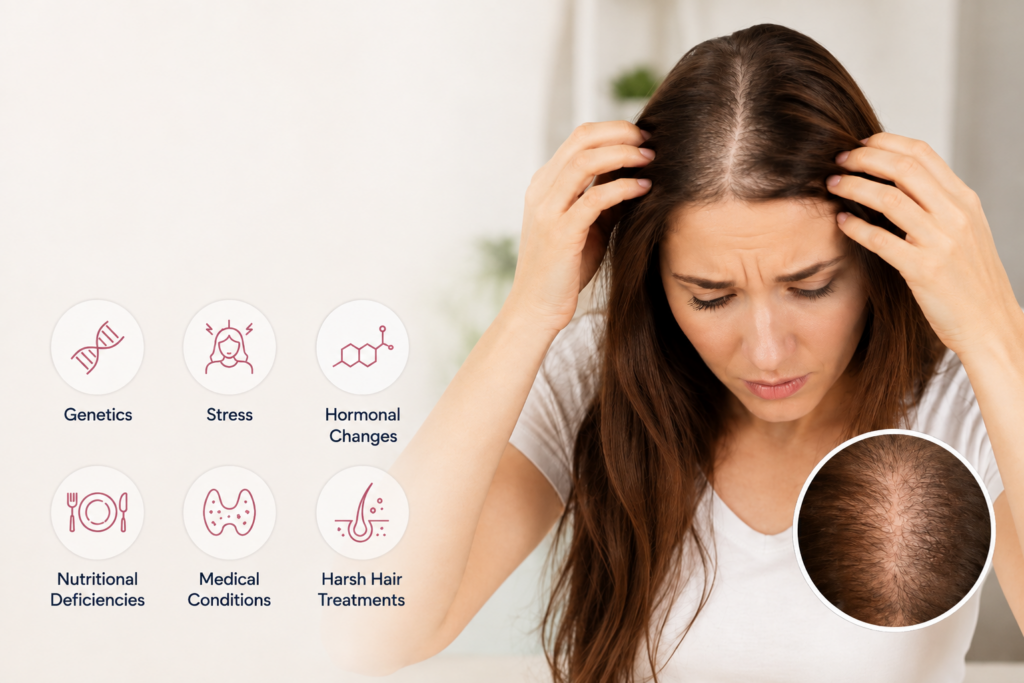
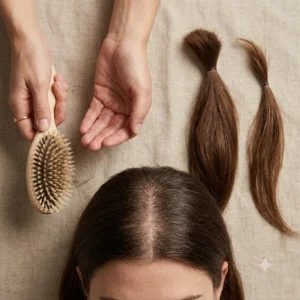
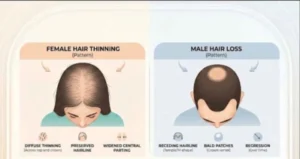 Hair thinning in women usually presents very differently from male pattern hair loss. While men often develop a receding hairline and bald patches, women are more likely to experience diffuse thinning across the top of the scalp. One of the earliest signs is often a widening central parting, sometimes described as a “Christmas tree” pattern.
Temporary hair shedding, known as telogen effluvium, can also cause an overall reduction in hair density without creating distinct bald patches. This differs from female pattern hair loss, where the hair thins progressively in a more predictable pattern.
Most Common Causes of Hair Thinning in Women
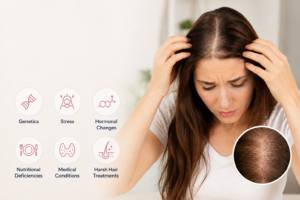
Hormonal Changes
Hormonal fluctuations are among the most common causes of female hair thinning. Pregnancy, childbirth, menopause, polycystic ovary syndrome (PCOS), changes in contraception and thyroid disorders can all affect the hair growth cycle.
Genetics
Female pattern hair loss, also known as androgenetic alopecia, is an inherited condition that causes progressive thinning over time. It often becomes more noticeable after the menopause but can develop at any age.
Stress and Illness
Physical or emotional stress can trigger telogen effluvium, causing a larger number of hairs to enter the shedding phase. Common triggers include surgery, significant illness, rapid weight loss, severe emotional stress and childbirth. The shedding usually begins two to three months after the triggering event.
Nutritional Deficiencies
Low iron stores, vitamin D deficiency, vitamin B12 deficiency, zinc deficiency and inadequate protein intake may contribute to excessive hair shedding. Blood tests may be recommended to investigate these causes.
When Thinning Becomes a Cause for Concern
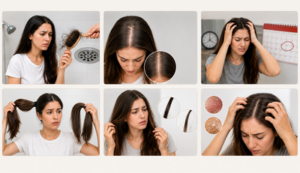 You should consider seeking professional advice if you notice:
- A widening parting that continues to become more noticeable
- A significant reduction in hair volume over several months
- Excessive shedding lasting longer than three to six months
- Visible areas of scalp where the hair was previously dense
- Hair thinning accompanied by scalp itching, redness, pain or scaling
- Sudden patchy hair loss or complete bald patches
Early assessment is particularly important because many forms of hair loss respond better to treatment before significant follicle damage occurs.
What Women Should Do Next
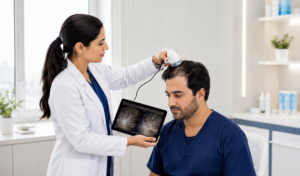
If you are concerned about hair thinning, the first step is obtaining an accurate diagnosis. At The Hairology Centre, we provide comprehensive hair and scalp assessments to identify the cause of your hair thinning. Book a consultation at hairologycentre or start with an online assessment at treatments.hairologycentre.com.