

Noticing your hair becoming thinner can be worrying. Whether you have seen more hair in the shower, a widening parting, a receding hairline, or reduced density when styling your hair, it is natural to wonder what is happening and whether it can be stopped.
The reassuring news is that hair loss is extremely common, and in many cases, it is both understandable and treatable. Hair loss is usually a sign that your hair follicles are changing how they function. These changes can occur for a variety of reasons, including genetics, hormones, stress, illness, nutritional deficiencies, or certain medical conditions.
For most people, hair loss does not mean that all of their hair follicles have permanently stopped working. In fact, many people still have active follicles capable of producing healthier, thicker hair when the underlying cause is identified and treated appropriately.
The most important thing to understand is that hair loss is not simply something that happens overnight. It is often a gradual process that develops over months or years. Recognising it early and taking action can make a significant difference to your long-term results.
If you are wondering why your hair is falling out, the sections below explain the most common causes and what can be done about them.
The Main Reason Most Men Lose Hair
For most men, male pattern hair loss is caused by a condition known as androgenetic alopecia.
The condition is inherited and occurs when hair follicles become genetically sensitive to a hormone called dihydrotestosterone (DHT). Over time, DHT causes affected follicles to shrink, resulting in hairs becoming progressively finer, shorter, and less visible until the follicle may eventually stop producing visible hair altogether.
Although the process sounds concerning, it is important to remember that it is often slow and predictable, which means there is usually an opportunity to intervene. Understanding the early signs of male pattern baldness can help you act before significant thinning occurs.
Why Hair Loss Often Starts in Your 30s and 40s
Many people assume that hair loss begins in old age, but for most men, the process actually starts much earlier.
The genetic sensitivity to DHT is present throughout life, but the effects accumulate gradually over time. Hair follicles do not suddenly stop working. Instead, they slowly become smaller and weaker over many years.
This is why many men first notice the symptoms of male pattern baldness during their 30s or 40s. They may observe:
- A receding hairline
- Thinning at the crown
- Reduced volume when styling
- Increased scalp visibility
- Slower regrowth after haircuts
Because these changes occur gradually, they are often dismissed as normal ageing. Unfortunately, waiting can make treatment more difficult.
Hair loss treatments are generally most effective when follicles are still active. Once a follicle has been dormant for a prolonged period, achieving significant regrowth becomes more challenging. This is why early assessment matters — the sooner you understand what is causing your hair loss, the more options you typically have available.
Hair Loss Is Not Always Genetic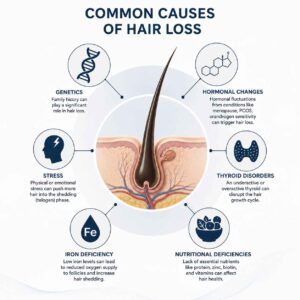
While genetics account for the majority of male hair loss, there are many other possible causes. In women especially, hair loss can be linked to a wide range of factors including:
- Hormonal imbalance and hair loss
- Menopause
- Thyroid disorders
- Iron deficiency
- Vitamin deficiencies
- Significant stress
- Recent illness
- Certain medications
- Autoimmune conditions such as alopecia areata
Some people experience a condition called telogen effluvium, where a stressful event causes more hairs than usual to enter the shedding phase of the hair cycle. Others may develop inflammatory scalp conditions that affect hair growth.
This is why a proper assessment is important before assuming that all hair loss is simply genetic. Different causes require different treatments. Women experiencing hair thinning symptoms should seek specialist advice to identify the underlying cause.
Understanding What Is Happening Inside the Hair Follicle
Each hair follicle follows a natural growth cycle. There are three main stages:
Growth Phase (Anagen)
This is when the hair actively grows. For scalp hair, this phase can last several years.
Transition Phase (Catagen)
A short period where the follicle prepares to enter its resting phase.
Resting and Shedding Phase (Telogen)
The hair eventually sheds and a new growth cycle begins.
Normally, these cycles occur continuously across the scalp. When hair loss develops, something disrupts this process. In male and female pattern hair loss, follicles gradually shrink. In telogen effluvium, more hairs than usual enter the shedding phase. In inflammatory conditions, the follicle itself may become damaged.
Understanding which process is occurring is essential when deciding on treatment.
What Are Your Options Right Now?
If you are concerned about hair loss, there are several evidence-based options available. These are the most clinically supported best hair loss solutions currently used at The Hairology Centre.
Minoxidil
Minoxidil topical solution helps stimulate hair growth by extending the growth phase of the hair cycle and improving follicle function. It is available in topical and oral forms and is commonly used in both men and women. A dedicated minoxidil for women formulation is also available.
Many patients notice reduced shedding, improved density, and thicker individual hairs. Minoxidil shampoo for women is also used as a supportive option alongside topical treatment.
Finasteride
Finasteride tablets work by reducing DHT levels. By addressing the hormonal driver behind male pattern hair loss, they help protect vulnerable follicles and slow ongoing thinning. For men who prefer to avoid oral tablets, a finasteride topical solution is also available. A combined minoxidil and finasteride topical solution is another option for suitable patients.
Dutasteride
Dutasteride is similar to finasteride but is generally considered more potent. It may be considered when additional DHT suppression is required following specialist assessment.
Addressing Underlying Causes
For patients whose hair loss is related to iron deficiency, thyroid disease, nutritional deficiencies, or hormonal changes, treatment may involve correcting the underlying issue rather than simply stimulating hair growth. This is particularly relevant for women experiencing female pattern hair loss.
Non-Surgical Treatment Options
Many patients are concerned about the cost and risks of surgery. The good news is that non-surgical hair loss treatments including minoxidil, finasteride, and dutasteride have strong clinical evidence and can deliver meaningful results without surgery. Natural hair loss treatments such as rosemary oil and saw palmetto also have some supporting evidence as supplementary options.
Lifestyle and Scalp Health
While lifestyle changes alone rarely reverse genetic hair loss, they can support healthy hair growth. Important factors include adequate protein intake, good sleep, stress management, scalp care, and treating any underlying scalp inflammation.
When Should You Act?
Many people wait until their hair loss becomes impossible to ignore. Unfortunately, this often means treatment is being started later than ideal.
You should consider seeking an assessment if you notice any of the following:
- A widening parting
- A receding hairline
- Reduced density
- More visible scalp
- Changes in hair texture or quality
- Increased shedding
The earlier the assessment, the greater the opportunity to preserve existing hair. Hair loss is often easier to prevent than it is to reverse.

How to Get a Proper Assessment
The first step is obtaining an accurate diagnosis. At The Hairology Centre, we understand that hair loss is rarely just a cosmetic concern. For many people, it affects confidence, self-image, and emotional wellbeing.
A hair loss consultation with our hair loss specialist Mandeep Matharu may include:
- Medical history review
- Family history assessment
- Examination of the scalp and hair
- Discussion of lifestyle factors
- Review of previous treatments
- Identification of potential underlying causes
Following assessment, a personalised hair loss treatment plan can be created based on your individual diagnosis and goals. There is no one-size-fits-all solution to hair loss as there are numerous types of hair loss. The most effective treatment is often the one that is tailored specifically to your needs.
You can also begin with our online assessment at treatments.hairologycentre.com if you prefer to start remotely.
Frequently Asked Questions
Is My Hair Loss Permanent?
Not necessarily. Some forms of hair loss are temporary and can improve once the underlying cause is addressed. Even in cases of genetic hair loss, many follicles remain active for years and can often respond to treatment. The sooner treatment begins, the greater the likelihood of preserving existing hair.
Will My Hair Loss Get Worse?
If the cause is male or female pattern hair loss, progression is common without treatment. The rate of progression varies between individuals, but most people notice gradual worsening over time. Early intervention with proven hair loss solutions for men and women can help slow or stabilise this process.
Can I Reverse Hair Loss?
In many cases, yes. The extent of improvement depends on the cause, how long it has been present, the condition of the follicles, and the treatment used. Many patients experience reduced shedding, improved density, and thicker hair following appropriate treatment. However, realistic expectations are important — the goal is often to preserve existing hair, slow progression, and maximise regrowth where possible.
What Is the Best Hair Loss Treatment in the UK?
The best hair loss treatment in the UK depends on the cause and severity of your hair loss. For most men, clinically proven options include minoxidil for men, finasteride tablets, and dutasteride. For women, minoxidil for women is commonly the first-line option. A hair loss treatment consultation is always the recommended starting point.
What Are Hair Thinning Solutions for Men?
The most effective hair thinning solutions for men include minoxidil topical solution, finasteride, and dutasteride, used as part of a personalised plan. Non-invasive hair loss treatments are typically recommended before considering surgical options such as a hair transplant.
Is There a Hair Loss Clinic Near Me?
he Hairology Centre operates as a specialist hair loss clinic with locations in Marlow and London. We also offer remote online assessments for patients across the UK, making it easy to access specialist advice wherever you are.
The Bottom Line
Hair loss is common, but it should never be ignored. For most men, genetics and DHT are the driving forces behind thinning hair. For women, underlying medical, hormonal, or lifestyle factors may be contributing.
The encouraging news is that effective treatments are available, and many people can successfully slow, stop, or improve their hair loss when action is taken early.
If you are concerned about thinning hair, seeking a professional assessment is the best place to start. Understanding why your hair loss is happening allows you to make informed decisions and access treatments that give you the best possible chance of maintaining healthy, confident hair for years to come.
For more information on hair loss causes and treatments, visit our complete guide: Hair Loss Treatment UK: Your Complete Guide