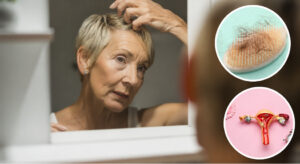
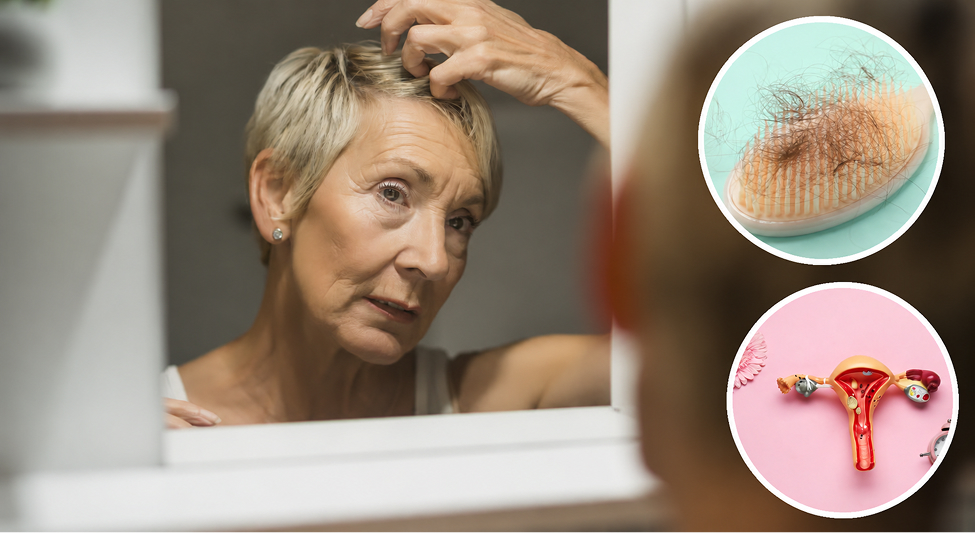
Menopause is a natural stage of life, but the hormonal changes that occur during this time can affect many aspects of wellbeing, including hair growth and texture. Many women notice increased shedding, a wider parting or reduced hair density around the temples and crown during perimenopause and menopause.
Although menopausal hair loss can be distressing, understanding the possible causes and available treatment options can help you make informed decisions about your hair health.
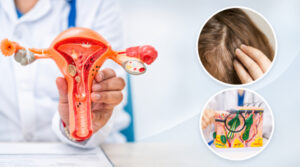 Why Does Menopause Cause Hair Loss?
Menopausal hair loss is often linked to changes in hormone levels, particularly oestrogen and progesterone. These hormones influence the hair growth cycle and may help support the length and quality of the growth phase.
As oestrogen levels fluctuate and eventually decline, the hair growth cycle may become shorter. More hairs can enter the resting and shedding phase, leading to increased hair fall and reduced overall density. The levels of androgens can decline at a slower rate.
Hormonal changes may also make the hair follicles more sensitive to androgens, such as testosterone and dihydrotestosterone (DHT). In genetically susceptible women, this can contribute to female pattern hair loss, also known as androgenetic alopecia.
Menopausal hair thinning may appear as:
- A widening central parting
- Reduced density around the crown
- Increased scalp visibility
- Thinning around the temples
- A smaller or less full ponytail
- More hair shedding during washing or brushing
Other factors can contribute to hair loss during midlife, including iron deficiency, thyroid problems, nutritional deficiencies, illness, stress and certain medications. This is why identifying the underlying cause is important.
When Does Menopausal Hair Loss Start?
Hair loss may begin during perimenopause, the stage before periods stop completely. Perimenopause can begin several years before the final menstrual period, and hormone fluctuations during this time may affect hair growth.
Some women notice changes in their hair in their 40s, while others experience thinning during their 50s or later. There is no single age when menopausal hair loss starts, and the timing can vary depending on genetics, hormone changes and general health.
Hair thinning may develop gradually rather than suddenly. If shedding is rapid, occurs in clearly defined patches or affects the eyebrows and eyelashes, it may indicate another condition and should be assessed.
Treatment Options for Menopausal Hair Loss
 Minoxidil
 is commonly used for female pattern hair loss. It may help support hair growth, improve hair density and prolong the growth phase of susceptible follicles.
Topical minoxidil is available in different strengths and formulations. Oral minoxidil may also be considered for selected patients, but it is prescription-only and requires an assessment of medical history, medication and possible side effects.
Treatment should be continued as advised, as stopping may lead to a gradual loss of the benefits gained.
Hormone Replacement Therapy (HRT)
HRT may help manage menopausal symptoms such as hot flushes, night sweats and vaginal dryness. Some women also notice changes in their hair during treatment.
However, HRT is not a guaranteed treatment for menopausal hair loss and is not prescribed to treat hair loss. The decision to use HRT should be made with a qualified healthcare professional after considering symptoms, medical history, risks and benefits.
Anti-Androgens
Anti-androgen treatments may be considered when androgen sensitivity contributes to female pattern hair loss. Options can include prescription medicines such as spironolactone in appropriate patients.
These treatments require careful assessment because they may affect blood pressure, potassium levels, menstrual patterns or other aspects of health. They are not suitable for everyone and should only be used under appropriate medical supervision.
Nutrition and Lifestyle
Adequate nutrition supports healthy hair growth. Ensure your diet includes sufficient protein, iron-rich foods, fruit, vegetables and healthy fats.
If hair shedding is significant, a clinician may recommend blood tests to investigate possible iron deficiency, thyroid problems or other nutritional concerns. Avoid taking high-dose supplements without professional advice.
Book a Specialist Hair Loss Assessment
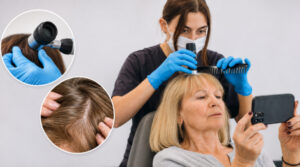 Menopausal hair loss can have several possible causes, and different conditions may require different treatments.
At The Hairology Centre, a specialist assessment may include a detailed medical history, scalp examination and trichoscopic assessment. This can help distinguish female pattern hair loss from telogen effluvium, alopecia areata, nutritional deficiencies and other scalp conditions.
Book your specialist hair loss consultation today to understand the cause of your thinning hair and explore suitable treatment options.
For more on the causes and types of hair loss, visit our hair loss guide.
Frequently Asked Questions
Is Menopausal Hair Loss Permanent?
Menopausal hair loss is not always permanent. Some shedding may improve when the underlying trigger is addressed. However, female pattern hair loss can be progressive and may require ongoing treatment to maintain improvements. Early assessment can help identify the cause and discuss appropriate options.
Can HRT Stop Hair Loss During Menopause?
HRT may improve some menopausal symptoms, but it does not reliably stop hair loss. Hair thinning may have several causes, including genetic sensitivity to androgens, nutritional deficiencies or thyroid problems. HRT should only be considered following an individual medical assessment.
What Is the Best Treatment for Thinning Hair During Menopause?
There is no single treatment that is best for every woman. Minoxidil may be suitable for female pattern hair loss, while anti-androgens may be considered in selected patients. Nutrition, investigation of deficiencies and treatment of underlying medical conditions may also be important. A specialist assessment is recommended before choosing treatment.
Should I Have Blood Tests for Menopausal Hair Loss?
Blood tests may be useful if symptoms or medical history suggest iron deficiency, thyroid problems, nutritional deficiencies or another medical cause. A healthcare professional can decide which tests are appropriate.
Medical note: Hair loss during menopause can have different causes. Prescription treatments should only be considered following an appropriate clinical assessment and suitability review.