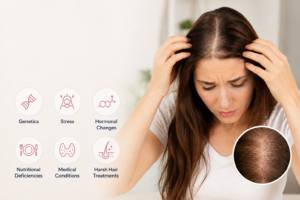
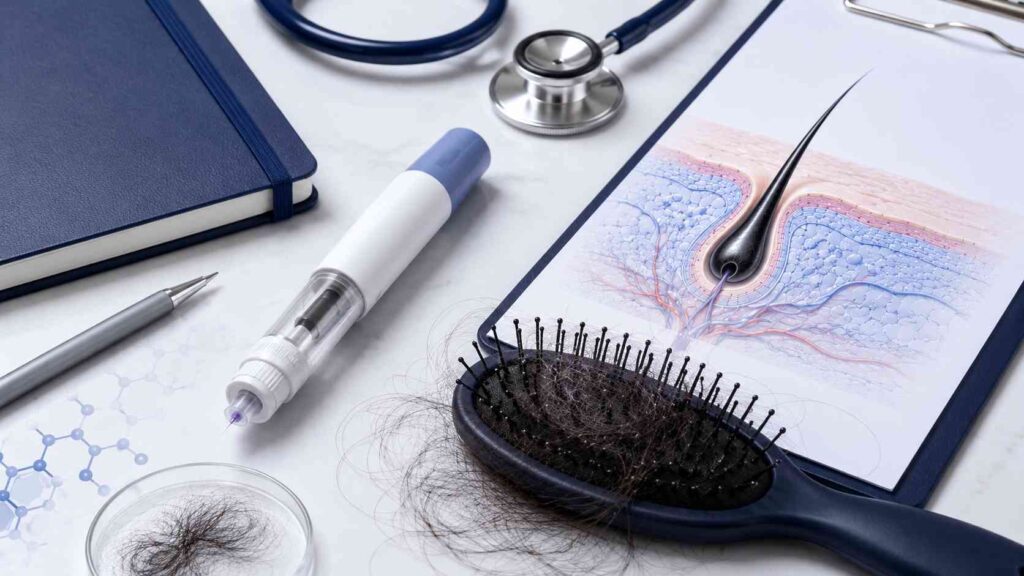
If you have started taking Trulicity and noticed increased hair shedding, thinning hair, or more hair coming out when you wash or brush it, you are probably wondering whether the medication is to blame.
The short answer is: possibly, yes.
Recent research suggests that medications in the GLP-1 receptor agonist family, including Trulicity, may be associated with an increased risk of certain types of hair loss. However, that does not necessarily mean the drug is directly damaging your hair follicles.
In many cases, the medication may be triggering a temporary shedding condition called telogen effluvium, or exposing an underlying tendency towards pattern hair loss that was already developing beneath the surface.
The important thing to know is that if your hair is falling out while taking Trulicity, you are not imagining it — and it is worth getting properly assessed by a hair loss specialist.
Why Might Trulicity Be Associated With Hair Loss?
 Trulicity belongs to a group of medications known as GLP-1 receptor agonists. These drugs were originally developed to help manage type 2 diabetes but are now widely used because of their effects on weight loss, blood sugar control, and metabolic health.
While they offer significant health benefits, researchers have increasingly noticed reports of hair loss among some users.
A major study presented at the 2025 European Academy of Dermatology and Venereology Congress analysed more than one million patient records and found that people taking GLP-1 medications experienced higher rates of certain forms of hair loss compared with similar patients who were not taking these drugs.
The two main types identified were:
- Telogen effluvium — temporary hair shedding
- Androgenetic alopecia — male or female pattern hair loss
Interestingly, the study did not find an increased risk of alopecia areata, the autoimmune form of hair loss.
Is It the Drug or the Weight Loss?
This is one of the most important questions a hair growth specialist needs to explore.
In many cases, hair loss associated with Trulicity may not be caused by the medication itself but by the rapid changes happening within the body. Significant weight loss places physiological stress on the body. Even when weight loss is intentional and beneficial, the body may interpret it as a major change.
This can push a larger number of hairs into the resting phase of the growth cycle, leading to increased shedding several months later. This condition is known as telogen effluvium.
Other contributing factors may include:
- Rapid weight reduction
- Reduced calorie intake
- Changes in protein consumption
- Nutritional deficiencies
- Hormonal imbalance and hair loss associated with weight loss
For many patients, the shedding starts two to four months after beginning treatment or experiencing significant weight loss. This timing often leads people to believe the medication is directly causing the problem, when the reality may be slightly more complex.
Could Trulicity Unmask Pattern Hair Loss?
Yes. One of the more interesting findings from recent research is that GLP-1 users appeared to have higher rates of androgenetic alopecia, commonly known as male or female pattern baldness.
This does not necessarily mean Trulicity causes genetic hair loss. Instead, the shedding triggered by weight loss or metabolic changes may reveal an underlying pattern hair loss condition that was already developing. Many people have early signs of male pattern baldness without realising it.
When a temporary shedding event occurs, overall hair density can drop enough for the underlying thinning to become much more noticeable. In these situations, patients often assume all of the hair loss is related to the medication when part of the problem may be pre-existing genetic hair loss — such as hair thinning symptoms in women that were already present.
This distinction is important because the treatment approach is different. A professional hair loss consultation at a dedicated hair loss clinic is the most reliable way to get the right diagnosis.
How Can You Tell What Type of Hair Loss You Have?
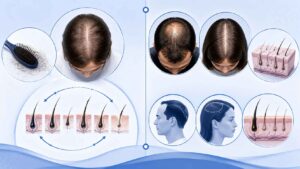 The pattern of hair loss often provides important clues.
Telogen effluvium typically causes:
- Increased shedding throughout the scalp
- Hair coming out when washing or brushing
- Overall reduction in density
- Sudden onset over weeks or months
Male pattern hair loss and female pattern hair loss more commonly cause:
- Thinning at the crown
- A widening parting in women — a key hair thinning symptom for women
- A receding hairline in men — one of the symptoms of male pattern baldness
- Gradual progression over time
In some cases, both conditions occur together. A person with underlying male or female pattern hair loss may experience telogen effluvium after starting Trulicity, making the thinning appear much more dramatic. This is why a professional assessment with a hair loss specialist is often the most important first step rather than simply assuming the medication is the sole cause.
What Should You Do If Your Hair Is Falling Out?
The first step is not to panic. Hair shedding associated with weight loss medications is often temporary and manageable. However, it is important not to ignore it either.
If you are experiencing hair loss while taking Trulicity, consider:
- Speaking with the clinician managing your medication
- Reviewing your rate of weight loss
- Checking for nutritional deficiencies
- Assessing protein intake
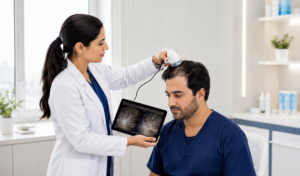
- Obtaining a specialist hair loss evaluation
In many cases, identifying the type of hair loss is the most important step. If the problem is telogen effluvium, the outlook is often very good. If underlying pattern hair loss has been uncovered, there are excellent hair loss solutions available. Early treatment including minoxidil topical solution, finasteride tablets, finasteride topical solution, or dutasteride can help preserve existing hair and improve long-term outcomes.
Most importantly, do not stop prescribed medication without first discussing it with your healthcare provider. The health benefits of GLP-1 medications may significantly outweigh the risk of hair loss for many patients.
Your Next Step
 If you have started Trulicity and noticed increased shedding, arrange a professional hair loss consultation as soon as possible. The earlier you determine whether you are dealing with temporary shedding, nutritional issues, or underlying male or female pattern hair loss, the sooner an appropriate treatment plan can be put in place.
In many cases, early intervention helps preserve more hair and provides reassurance about what is happening. You can book a hair loss treatment consultation at The Hairology Centre or start with an online assessment.
Frequently Asked Questions
Is the Hair Loss Permanent?
Not usually. If the hair loss is caused by telogen effluvium related to weight loss or physiological stress, the condition is often temporary and hair frequently regrows over time. However, if underlying male or female pattern hair loss has been uncovered, treatment may be required to prevent further progression. A hair loss specialist can assess which situation applies to you.
Will the Hair Loss Stop When I Come Off Trulicity?
It may, depending on the cause. If Trulicity-related weight loss triggered telogen effluvium, shedding often improves once the body stabilises. However, stopping the medication will not reverse underlying genetic male or female pattern hair loss if that condition is also present.
What Can I Take for the Hair Loss?
The best treatment depends on the diagnosis. Temporary shedding may simply require time, nutritional optimisation, and monitoring. Pattern hair loss may benefit from evidence-based hair loss medication such as minoxidil for men or minoxidil for women, finasteride tablets, dutasteride, or a minoxidil and finasteride topical solution. These represent the strongest best hair loss solutions UK options for androgenetic alopecia. A hair loss treatment consultation can help determine the most appropriate option for your situation.
Are There Non-Surgical Hair Loss Treatments That Help?
Yes. Non-surgical hair loss treatments including minoxidil, finasteride, and dutasteride are all available at The Hairology Centre and represent excellent hair transplant alternatives for patients who want to avoid surgery. Non-invasive hair loss treatments and non-surgical hair restoration are particularly well suited for GLP-1-related hair loss where pattern hair loss has been uncovered.
What About Hair Loss Solutions Specifically for Men or Women?
For men, the strongest hair loss solutions for men include minoxidil topical solution, finasteride tablets, and dutasteride. Women with GLP-1-related female pattern hair loss benefit from minoxidil for women and addressing any hormonal imbalance and hair loss factors simultaneously. For women, minoxidil shampoo for women can also be used as a supportive option.
Final Thoughts
If you are taking Trulicity and your hair is falling out, there is growing evidence that the medication or the changes associated with it may be contributing to the problem.
The good news is that many cases are temporary, particularly when related to telogen effluvium caused by rapid weight loss or metabolic changes. However, hair shedding can also reveal underlying pattern hair loss that may benefit from treatment. Rather than guessing, the most effective approach is to identify the exact cause and act early with help from a specialist hair loss clinic.
Understanding what is happening now can make a significant difference to your hair recovery and long-term outcomes. Book a hair loss specialist consultation at The Hairology Centre today or begin with a free online assessment.
For more information on hair loss causes and treatments, visit our complete guide: Hair Loss Treatment UK: Your Complete Guide