Healthy hair starts with a healthy scalp. The scalp provides the environment in which hair follicles grow, and problems such as inflammation, irritation, infection and certain scalp diseases can affect the hair growth cycle.
If you are experiencing hair loss, thinning hair, scalp itching, flaking or inflammation, it is important to consider the condition of your scalp as well as other possible causes, including genetics and hormonal changes.
How Does Scalp Health Affect Hair Loss?
 Each hair grows from a follicle within the scalp. For healthy hair growth, the scalp needs to provide a suitable environment for these follicles.
Inflammation or irritation around the follicles can interfere with normal hair growth. Some scalp conditions can also cause increased shedding, breakage or scratching-related damage.
However, having an itchy or flaky scalp does not automatically mean that it is the cause of your hair loss. Conditions such as female pattern hair loss and male pattern hair loss are primarily associated with genetics and follicular sensitivity to hormones rather than poor scalp hygiene.
In some people, more than one condition can occur at the same time. For example, someone may have genetic hair thinning alongside seborrhoeic dermatitis. Identifying each contributing factor is important when deciding on appropriate treatment.
Scalp Conditions That Can Cause or Worsen Hair Loss
 Seborrhoeic Dermatitis
Seborrhoeic dermatitis is a common inflammatory scalp condition that can cause dandruff, itching, redness and scaling. Scratching an irritated scalp may contribute to hair breakage or temporary increased shedding.
Treating the underlying scalp inflammation can help improve scalp comfort and reduce scratching, although treating dandruff does not necessarily reverse genetic hair loss.
Psoriasis
Scalp psoriasis can cause areas of thickened, scaly skin, redness and itching. In some cases, vigorous scratching or removal of scales can damage hairs and contribute to temporary hair loss.
Hair usually has the potential to regrow when the underlying inflammation is controlled, although persistent or severe scalp disease should be assessed professionally.
Folliculitis
Folliculitis occurs when hair follicles become inflamed. It may cause small red bumps, spots, tenderness or itching around individual follicles.
Depending on the cause and severity, appropriate treatment may be required to prevent ongoing inflammation and potential complications.
Scarring Alopecias
Scarring alopecias are a group of conditions in which inflammation can permanently damage hair follicles and replace them with scar tissue.
Examples include conditions such as frontal fibrosing alopecia (FFA) and other forms of cicatricial alopecia. Early assessment is particularly important because once a follicle has been permanently destroyed, it cannot produce a new hair.
Symptoms such as persistent scalp inflammation, pain, burning, crusting or hair loss accompanied by eyebrow thinning should therefore not be ignored.
How to Maintain a Healthy Scalp
Good scalp care can help support overall scalp health, although it cannot prevent every type of hair loss.
Helpful measures include:
- Wash your scalp regularly according to your hair type and needs.
- Use a suitable shampoo to remove excess oil, sweat and product build-up.
- Avoid excessive scratching when your scalp is itchy.
- Avoid very tight hairstyles that place repeated tension on the hair.
- Limit excessive heat and harsh chemical treatments.
- Treat persistent dandruff or scalp inflammation rather than ignoring it.
- Seek professional advice if you develop persistent redness, scaling, pain or sores.
It is also important to remember that overwashing does not usually cause genetic hair loss, and keeping the scalp clean is not a treatment for androgenetic alopecia. If you are considering home remedies, our article on whether natural hair loss treatments work looks at the evidence.
When Should You Seek a Hair Loss Assessment?
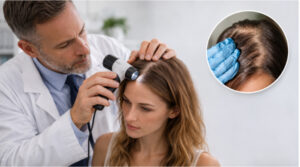 Consider seeking professional advice if your hair loss is persistent, rapidly worsening or accompanied by scalp symptoms.
An assessment is particularly important if you notice bald patches, eyebrow loss, scalp pain, redness, scaling, pustules, crusting or significant inflammation.
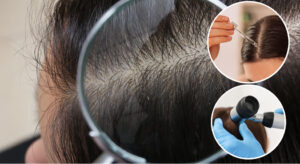
At The Hairology Centre, a specialist assessment may include a detailed medical history, scalp examination and trichoscopic assessment. This can help distinguish scalp conditions from genetic hair loss and identify situations where more than one condition may be contributing to thinning.
Book your specialist hair loss assessment today to understand the cause of your hair loss and explore suitable treatment options.
For more on the causes and types of hair loss, visit our hair loss guide.
Frequently Asked Questions
Can Dandruff Cause Hair Loss?
Dandruff itself does not usually cause permanent hair loss. However, an irritated, itchy scalp can lead to frequent scratching, which may contribute to hair breakage or temporary increased shedding. If you have persistent dandruff alongside significant thinning, another condition such as female or male pattern hair loss may also be present.
Can a Dry Scalp Cause Hair Loss?
A dry scalp does not usually directly cause permanent hair loss. However, dryness can cause itching and scratching, potentially resulting in hair breakage or irritation. Persistent dryness, scaling or inflammation should be assessed because it may actually be caused by an underlying scalp condition.
How Can I Tell If My Hair Loss Is Due to a Scalp Condition or Genetics?
The pattern of hair loss can provide clues, but it cannot always establish the cause. Genetic hair loss commonly develops gradually, such as a receding hairline or thinning crown in men or widening of the central parting in women. Scalp conditions may be associated with itching, redness, scaling, inflammation, pain or crusting. A professional scalp examination and trichoscopy can help distinguish between different causes.
Can Treating My Scalp Condition Regrow My Hair?
It depends on the cause of the hair loss. Hair affected by inflammation or scratching may recover when the scalp condition is successfully managed. However, genetic hair loss requires a different approach, while scarring alopecias can permanently damage follicles. Correct diagnosis is therefore important before treatment.
Medical note: Hair loss has many possible causes. Persistent or rapidly progressing hair loss, particularly when accompanied by scalp inflammation or eyebrow loss, should be assessed by an appropriately qualified healthcare professional.