Hair loss in your 20s can be surprising and difficult to understand, whether you are a man or a woman. Although some hair shedding is completely normal, noticeable thinning, a receding hairline or increased scalp visibility at a young age can sometimes indicate an underlying condition.
The good news is that early hair loss does not automatically mean permanent baldness. Understanding the possible causes and getting an accurate diagnosis can help you explore appropriate treatment options early.
Why Does Hair Loss Happen in Your 20s?
 There are several possible causes of hair loss in your 20s. Genetics is an important factor. Male pattern hair loss and female pattern hair loss, also known as androgenetic alopecia, can both develop at a relatively young age.
In genetically susceptible people, hair follicles may be sensitive to androgens such as dihydrotestosterone (DHT). Over time, affected follicles can become smaller and produce finer, shorter hairs.
However, genetic hair loss is not the only possibility. Other causes include:
- Telogen effluvium following stress, illness or significant weight loss
- Nutritional deficiencies, including low iron
- Polycystic ovary syndrome
- Thyroid problems
- Hormonal changes
- Certain medications
- Scalp conditions
- Alopecia areata
- Tight hairstyles or repeated traction
- Excessive chemical or heat-related hair damage
This is why it is important not to assume that thinning hair is simply genetic.
Early Signs of Hair Loss to Watch For
The early signs of hair loss can differ between men and women.
Men may notice:
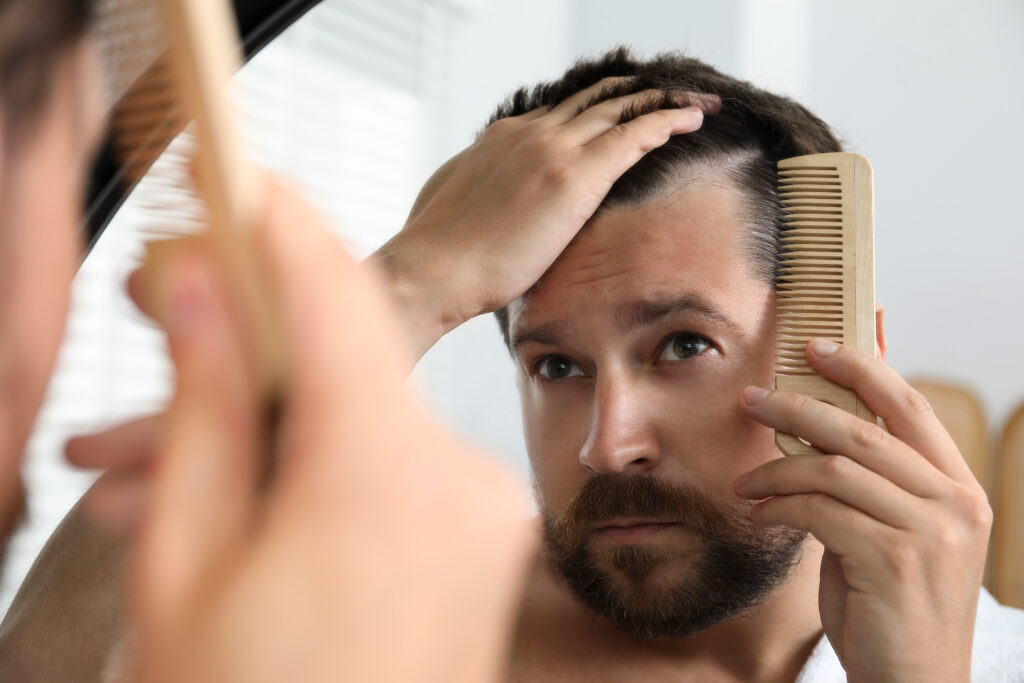
- Receding temples
- A developing M-shaped hairline
- Thinning around the crown
- Finer hairs around the front of the scalp
- Increased scalp visibility
Women may notice:
- A widening central parting
- Reduced density around the crown
- Increased scalp visibility
- A thinner ponytail
- Gradual thinning across the top of the scalp
- Increased hair shedding when washing or brushing
Some people experience increased shedding rather than obvious thinning. Taking photographs over several months can help identify changes that may otherwise be difficult to notice.
Why Starting Treatment Early Can Make a Difference
When hair loss is identified early, treatment can focus on maintaining existing hair as well as supporting regrowth where appropriate.
This can be particularly important with androgenetic alopecia because affected follicles may gradually become smaller and produce increasingly fine hairs. Treatment may be more effective when there are still viable follicles producing hair.
However, starting treatment early does not mean everyone needs medication. The first step is understanding the cause of the hair loss. Some forms of shedding are temporary and may improve once the underlying trigger has been addressed.
Treatment Options: Finasteride, Minoxidil and Combination Therapy
 Finasteride
 is a prescription medicine primarily used for male pattern hair loss. It reduces the conversion of testosterone to DHT, helping to reduce the hormonal effect on susceptible hair follicles.
It may help slow further hair loss and maintain existing hair in appropriate patients. Finasteride is not suitable for everyone, and potential adverse effects, including sexual and psychiatric side effects, should be discussed with a qualified prescriber.
Minoxidil
Minoxidil is used for several types of hair loss and may be suitable for both men and women, depending on the diagnosis and formulation.
It may support hair growth by increasing cell division, encouraging blood supply to the root of the hair and may help prolong the growth phase.
Topical minoxidil is available in different strengths. Oral minoxidil may also be considered for selected patients but is prescription-only and requires appropriate clinical assessment.
Combination Therapy
In some patients, combining treatments that work through different mechanisms may be considered. For example, finasteride and minoxidil may be used together for appropriate men with male pattern hair loss.
For women, treatment may involve minoxidil or other prescription options depending on the underlying diagnosis, hormonal factors and individual circumstances.
Getting Started at The Hairology Centre
If you have noticed hair loss in your 20s, you do not need to wait until the thinning becomes more obvious before seeking professional advice.
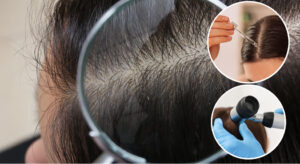
At The Hairology Centre, a specialist consultation may include a detailed medical history, scalp examination and trichoscopic assessment. This can help distinguish genetic hair loss from temporary shedding, scalp conditions, nutritional problems and other causes.
Book your hair loss consultation today to understand what is happening and explore suitable treatment options.
For more on the causes and types of hair loss, visit our hair loss guide.
Frequently Asked Questions
Is Hair Loss at 20 Permanent?
Not necessarily. Some causes, such as telogen effluvium, can be temporary and hair may regrow once the underlying trigger has resolved. Genetic hair loss can be progressive, but treatment may help slow progression and maintain existing hair.
Will I Definitely Go Bald If I Start Losing Hair in My 20s?
No. Hair loss in your 20s does not automatically mean that you will become completely bald, but the risk increases dramatically for men. The pattern and progression vary considerably between individuals. A specialist assessment can help identify the likely cause.
Is Finasteride Safe for Men in Their 20s?
Finasteride is prescribed to some men in their 20s with male pattern hair loss, but it is not suitable for everyone. Potential adverse effects, including sexual and psychiatric side effects, should be discussed with a qualified prescriber before treatment is started.
What Is the Fastest Hair Loss Treatment for Young Men and Women?
There is no single treatment that works fastest for everyone. Hair grows at the same rate. Minoxidil may support hair growth, while finasteride can reduce the effect of DHT in appropriate men. Other treatments may be considered depending on the cause of hair loss. Because hair grows slowly, visible improvement generally takes time.
Medical note: Hair loss has many possible causes. Prescription treatments should only be considered following an appropriate clinical assessment and suitability review.