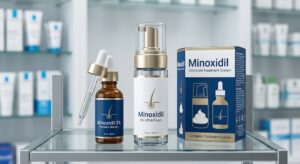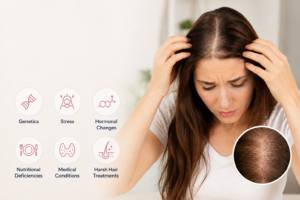

If you are considering aminexil for hair loss, the most important question is simple: is it actually worth buying?
The honest answer is that aminexil may help reduce hair shedding and improve the appearance of hair in some people, but the evidence supporting it is relatively limited compared with established treatments such as minoxidil topical solution, finasteride tablets, or dutasteride. While aminexil is often marketed as a clinically proven hair loss treatment, the available research is not nearly as strong as many consumers assume.
That does not mean aminexil is useless. Some men report improvements in hair density and reduced shedding while using products containing aminexil. However, if your goal is to treat progressive male pattern hair loss, there are generally better-supported options available.
Understanding where aminexil fits within the best hair loss solutions landscape can help you make a more informed decision.
What Is Aminexil?
Aminexil is a topical ingredient commonly found in hair loss products and scalp treatments.
It was developed as a molecule related to minoxidil and is designed to help maintain a healthy environment around hair follicles. The theory is that aminexil may help prevent the hardening of collagen around the hair root, allowing follicles to function more effectively and potentially reducing excessive hair shedding.
Unlike finasteride tablets or dutasteride, aminexil does not target DHT, the hormone primarily responsible for male pattern baldness. It is also not considered a direct hair growth stimulant in the same way as minoxidil for men.
For this reason, aminexil is generally viewed as a supportive treatment rather than a primary solution for genetic hair loss. It does not represent one of the best hair loss treatment UK options for progressive androgenetic alopecia.
What Does the Clinical Evidence Say?
One of the challenges with aminexil is that there are relatively few high-quality clinical studies available.
Several studies have reported improvements in hair density, reduced shedding, and increased patient satisfaction when using aminexil-containing products. However, many of these studies are small, short-term, or sponsored by manufacturers.
Compared with established treatments for male pattern hair loss, the evidence base is limited. There is currently no strong evidence showing that aminexil consistently reverses male pattern hair loss or produces substantial regrowth in the way that proven hair loss medication can.
In many cases, improvements reported with aminexil relate more to reducing hair fall and improving hair quality rather than generating significant new hair growth. This distinction matters.
For men experiencing temporary shedding, seasonal hair loss, or early thinning, reducing excessive hair fall may be beneficial. However, for men with androgenetic alopecia, the underlying problem is follicle miniaturisation driven by DHT sensitivity. Because aminexil does not directly address that process, its effectiveness may be limited when used as a standalone treatment.
That is why many hair loss specialists consider aminexil a supplementary option rather than a core treatment for progressive hair loss. Natural hair loss treatments like aminexil sit in a different category to clinically proven medical treatments.
How Does Aminexil Compare to Minoxidil?
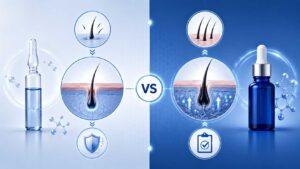
This is where the difference becomes much clearer.
Both aminexil and minoxidil topical solution are topical treatments commonly used by people concerned about hair thinning. However, the strength of evidence behind them is very different.
Minoxidil has been extensively studied for decades and remains one of the most widely recommended non-surgical hair loss treatments in the world. Multiple large-scale clinical trials have demonstrated its ability to improve hair growth, increase hair density, and slow progression of male pattern hair loss. Minoxidil for women is equally well established for female pattern hair loss. Aminexil does not have the same level of scientific support.
In practical terms, most specialists would consider minoxidil the more reliable and evidence-based option. If a patient asks whether they should choose aminexil or minoxidil for androgenetic alopecia, minoxidil would generally be the stronger recommendation because we have significantly more data supporting its effectiveness.
That does not mean aminexil has no value. Some patients prefer its cosmetic feel, tolerate it better, or use it alongside other treatments as part of a broader hair loss programme. A minoxidil and finasteride topical solution or finasteride topical solution would typically represent a stronger combination approach than aminexil alongside minoxidil. However, aminexil should not be viewed as an equivalent alternative to minoxidil from an evidence perspective.
Mandeep Matharu’s Clinical Recommendation

As a hair loss specialist, my clinical view on aminexil is straightforward. I do not consider it a first-line treatment for male pattern baldness.
The main reason is that we simply have much stronger evidence supporting treatments such as minoxidil for men, finasteride tablets, and dutasteride. These treatments directly address the biological mechanisms that drive most male hair loss and have consistently demonstrated results in large clinical studies.
That said, aminexil may have a role in certain situations. For example, people who are experiencing increased shedding but are not ready to start prescription treatment may wish to try an aminexil-based product. It can sit alongside natural hair loss treatments as a supplementary option.
Where I would be cautious is when people rely on aminexil alone while their hair loss continues to progress. One of the most common mistakes I see at our hair loss clinic is patients spending years using cosmetic or lightly supported treatments while male pattern baldness steadily advances. By the time they seek a hair loss consultation, many follicles have already undergone significant miniaturisation.
If you have a receding hairline, thinning crown, or ongoing male pattern hair loss, I would generally encourage looking at hair loss medication with stronger clinical evidence rather than depending solely on aminexil. The earlier effective treatment begins, the better the chances of preserving existing hair. You can book a hair loss treatment consultation or start with an online assessment.
Frequently Asked Questions
Is Aminexil Better Than Minoxidil?
Based on current evidence, no. Minoxidil topical solution has a much larger body of clinical research supporting its ability to improve hair growth and slow male pattern hair loss. Aminexil may help reduce shedding in some individuals, but it is not generally considered more effective than minoxidil. For women, minoxidil for women is similarly the stronger evidence-based option over aminexil.
Is Aminexil Safe?
Aminexil is generally considered safe for most users when used as directed. Side effects are usually mild and may include temporary scalp irritation, redness, or sensitivity. If irritation occurs, it is advisable to stop treatment and seek professional advice from a hair growth specialist.
Which Products Contain Aminexil?
Aminexil is commonly found in a number of over-the-counter hair loss products, scalp serums, and treatment ampoules. It is often marketed as an ingredient designed to strengthen hair and reduce shedding. Product availability varies by country and manufacturer.
What Are the Best Hair Loss Solutions Instead of Aminexil?
The best hair loss solutions for men with progressive hair loss include minoxidil topical solution, finasteride tablets, finasteride topical solution, and dutasteride. These represent the strongest hair loss medication UK options for androgenetic alopecia and are available at The Hairology Centre following a specialist assessment.
Can I Use Aminexil Alongside Hair Loss Solutions for Men?
Yes. Aminexil can be used as a supplementary option alongside clinically proven hair loss solutions for men such as minoxidil. However, it should not be relied upon as a primary treatment. For men with early signs of male pattern baldness, starting a proven medical treatment early gives the best long-term outcome.
Is There a Non-Surgical Hair Loss Treatment That Works Better Than Aminexil?
Yes. Non-surgical hair loss treatments including minoxidil, finasteride, and dutasteride have significantly stronger clinical evidence than aminexil. Non-invasive hair loss treatments and non-surgical hair restoration options are all available at The Hairology Centre and should be considered before relying on aminexil alone for progressive hair loss.
What About Hair Thinning Solutions for Women?
For women experiencing hair thinning symptoms female or hormonal imbalance and hair loss, aminexil is unlikely to be the most effective approach. Minoxidil for women and specialist-guided treatment plans from a hair loss clinic will typically produce better results.
Final Thoughts
Aminexil is not completely unsupported by evidence, and some users may notice reduced shedding or improvements in hair appearance. However, the scientific data behind aminexil remains relatively limited compared with proven treatments such as minoxidil topical solution, finasteride tablets, and dutasteride.
For men and women with progressive male and female pattern hair loss, aminexil is unlikely to be the strongest option available. It may have a place as a supplementary treatment or entry-level approach, but it should not be viewed as a replacement for therapies with a much stronger evidence base.
If you are concerned about hair loss, the most important step is obtaining an accurate diagnosis from a hair loss specialist and understanding which treatments are most likely to work for your specific situation. Book a hair loss consultation at The Hairology Centre today.
For more information on hair loss causes and treatments, visit our complete guide: Hair Loss Treatment UK: Your Complete Guide