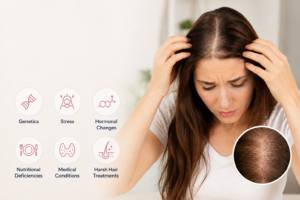

Yes you can. If you have noticed more hair in your brush, on your pillow, or in the shower drain, you are not alone. Hair loss affects millions of men and women and can be a source of significant anxiety and frustration.
The good news is that, in many cases, hair loss can be slowed, stopped, and sometimes even reversed if it is identified and treated early. The key is understanding what is causing your hair loss and starting the right treatment before significant thinning occurs.
At The Hairology Centre, one of the most common questions we hear is: “What can I do to stop my hair falling out?”
The answer is that there are several effective treatment options available, but not all treatments work equally well. While the internet is full of shampoos, supplements, and miracle cures, only a handful of treatments have consistently been shown to help prevent hair loss and promote regrowth.
Let’s explore what actually works.
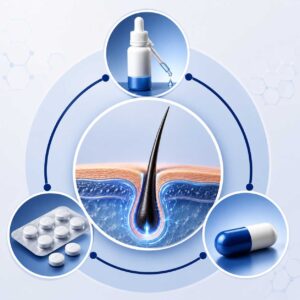
The Three Proven Options That Actually Work
For people experiencing pattern hair loss, also known as androgenetic alopecia, three treatments have the strongest evidence behind them:
1. Minoxidil
Minoxidil is one of the most widely used hair loss treatments in the world.
Originally developed as a medication for high blood pressure, researchers noticed that patients taking it experienced increased hair growth. It is now commonly used to treat both male and female pattern hair loss.
Minoxidil topical solution works by:
- Increasing blood flow around the hair follicle
- Extending the growth phase of the hair cycle
- Encouraging miniaturised hairs to become thicker and stronger
It is available as:
- Topical solution or foam applied directly to the scalp
- Low-dose oral tablets prescribed by a healthcare professional
Many patients find oral minoxidil easier to use than topical treatments because it avoids the need for daily scalp application.
Minoxidil does not cure hair loss, but it can help maintain existing hair and improve density in many patients. Minoxidil shampoo for women is also available as a supportive option for female patients.
2. Finasteride
Finasteride works differently from minoxidil.
Hair follicles affected by pattern hair loss become sensitive to a hormone called dihydrotestosterone (DHT). Over time, DHT causes follicles to shrink, leading to thinner and shorter hairs.
Finasteride blocks the enzyme responsible for converting testosterone into DHT.
By reducing DHT levels, finasteride tablets help:
- Slow ongoing hair loss
- Protect vulnerable hair follicles
- Promote thicker hair growth
Finasteride is commonly prescribed for men but may also be considered for some post-menopausal women following a specialist assessment. A finasteride topical solution is also available for patients who prefer to avoid oral tablets.
For some patients, a combined minoxidil and finasteride topical solution may be recommended as part of a personalised treatment plan.
3. Dutasteride
Dutasteride is similar to finasteride but is generally considered more potent.
Like finasteride, it reduces DHT levels, but it blocks additional pathways involved in DHT production.
This means dutasteride can sometimes be effective in patients who have not achieved their desired results with finasteride alone.
Dutasteride may be considered when:
- Hair loss is progressing despite treatment
- More aggressive intervention is needed
- Specialist assessment determines it is appropriate
Because it is a stronger medication, careful discussion of benefits and potential risks is important before starting treatment.
How Do I Know Which Treatment Is Right For Me?
There is no single treatment that suits everyone. The most appropriate option depends on several factors, including:
Your Diagnosis
Not all hair loss is caused by pattern baldness. Common causes include:
- Female pattern hair loss
- Male pattern hair loss
- Telogen effluvium
- Frontal fibrosing alopecia
- Alopecia areata
- Nutritional deficiencies
- Hormonal imbalance and hair loss
- Thyroid disorders
A proper assessment is essential before starting treatment.
Your Age and Hormonal Status
Treatment choices may differ depending on age, sex, menopausal status, and family history. For example, some medications may be suitable for post-menopausal women but not appropriate for women who may become pregnant.
Your Treatment Goals
Some patients want to slow further hair loss, maintain current density, improve thickness, or maximise regrowth. Your treatment plan should reflect your goals and expectations.
Your Medical History
Certain medications may not be suitable depending on existing health conditions, other medications, or personal preferences. This is why an individual hair loss consultation is important.
What Results Can I Realistically Expect?
One of the biggest misconceptions about hair loss treatment is that results happen quickly. Hair grows slowly. Most people will not see significant changes after a few weeks.
The First Few Months
Some patients experience increased shedding during the first few weeks of treatment. Although this can be concerning, it is often a sign that older hairs are being replaced by newer growth.
Three to Six Months
This is usually when patients begin noticing reduced shedding, improved hair quality, and increased density. Photographs are often helpful because gradual improvements can be difficult to notice day to day.
Six to Twelve Months
Most meaningful results become visible during this period. Many patients report thicker hair, better scalp coverage, and improved confidence.
Long-Term Treatment
Hair loss treatments require ongoing use. If treatment is stopped, the underlying hair loss process generally resumes and gains may gradually be lost. Consistency is one of the most important factors for success.

How To Get Started At The Hairology Centre
The first step is obtaining an accurate diagnosis. At The Hairology Centre, we take time to understand your hair loss history, medical background, family history, previous treatments, and lifestyle factors.
Following a detailed assessment, we create a personalised treatment plan tailored to your specific needs. This may include:
- Minoxidil for men or minoxidil for women — oral or topical
- Finasteride tablets or topical finasteride where appropriate
- Nutritional optimisation
- Scalp health advice
- Ongoing monitoring and support
Our goal is to help you understand your options and make informed decisions about your treatment.
The earlier intervention begins, the greater the opportunity to preserve existing hair and achieve meaningful improvement. You can book a hair loss treatment consultation with our hair loss specialist today.
Frequently Asked Questions
Does Minoxidil Really Work?
Yes. Minoxidil is one of the most extensively studied hair loss treatments available. Many patients experience reduced shedding and improved hair density when used consistently. Results vary between individuals, but it remains a cornerstone of modern hair loss treatment.
How Long Does Minoxidil Take To Work?
Most patients require at least three to six months before noticeable improvement occurs. Maximum results often take six to twelve months. Patience and consistency are essential.
Can Hair Grow Back After Hair Loss?
In many cases, yes. If hair follicles remain active, treatments such as minoxidil, finasteride, or dutasteride may help improve hair growth and thickness. However, long-standing hair loss may be more difficult to reverse completely, which is why early assessment and treatment are so important.
What Are the Best Hair Loss Solutions for Men?
The best hair loss solutions for men include minoxidil topical solution, finasteride tablets, and dutasteride. The right option depends on the type and severity of hair loss, which is why a professional assessment is always recommended. For men exploring every option, hair transplant alternatives including non-surgical hair restoration are also worth considering.
Are There Non-Surgical Hair Loss Treatments That Actually Work?
Yes. Non-surgical hair loss treatments including minoxidil, finasteride, and dutasteride have strong clinical evidence behind them. Many patients achieve meaningful regrowth without needing surgery. Natural hair loss treatments such as rosemary oil and saw palmetto also have some supporting evidence, though the results are generally more modest.
What Are the Symptoms of Male Pattern Baldness?
The symptoms of male pattern baldness include a receding hairline, thinning at the crown, and overall reduction in hair density. Recognising the early signs of male pattern baldness is important because early treatment gives the best results.
What About Hair Thinning Solutions for Men?
For men experiencing hair thinning, the most effective approach is a clinical assessment to identify the cause, followed by a personalised plan. Hair thinning solutions for male patients typically include minoxidil, finasteride, and scalp health support.
Take The First Step
If you are concerned about hair loss, you do not have to simply accept it. Effective treatments are available, and the sooner treatment begins, the greater the chance of preserving and improving your hair.
At The Hairology Centre, we provide evidence-based assessments and personalised treatment plans designed to help you take control of your hair health and regain confidence in your appearance.
For more information on hair loss causes and treatments, visit our complete guide: Hair Loss Treatment UK: Your Complete Guide