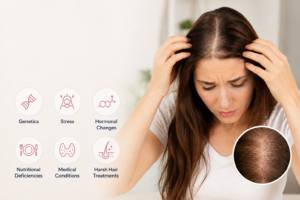
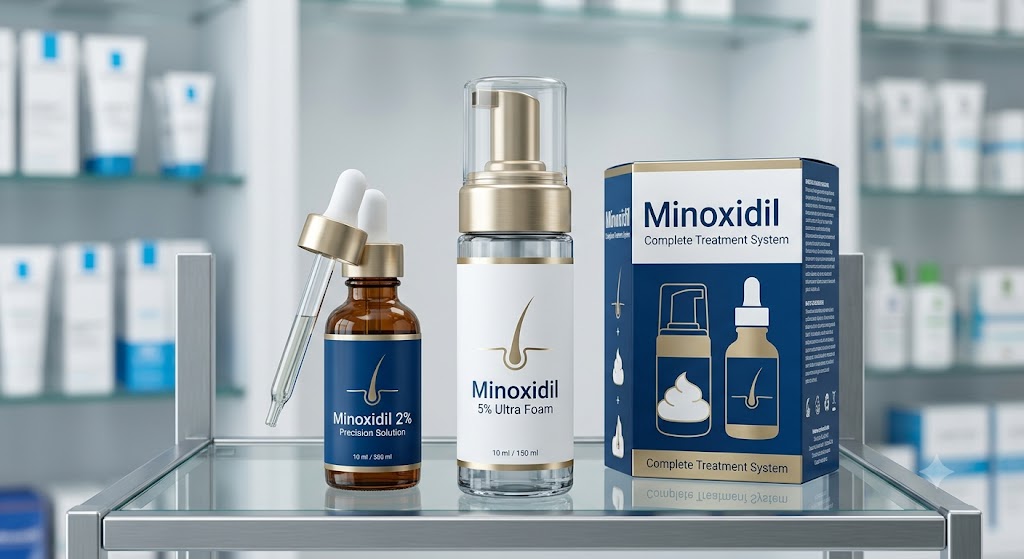
Minoxidil is one of the most widely studied and clinically proven treatments for hair loss. It is suitable for both men and women and is commonly used to treat androgenetic alopecia (pattern hair loss) in both sexes.
How Minoxidil Topical Solution Works 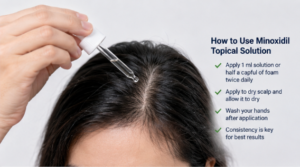
Minoxidil was originally developed as a medication to treat high blood pressure. During clinical trials, researchers noticed that patients experienced increased hair growth as a side effect. This led to its development as a topical hair loss treatment.
Although its exact mechanism is not fully understood, minoxidil is believed to work in several ways:
- It increases blood flow around the hair follicle.
- It prolongs the anagen (growth) phase of the hair cycle.
- It shortens the resting (telogen) phase, encouraging new hairs to grow.
- It enlarges miniaturised hair follicles, allowing them to produce thicker, healthier hairs.
Importantly, minoxidil works by improving the function of existing hair follicles. It does not create new follicles, which is why treatment is most effective when started during the early stages of hair loss. Some people experience increased shedding during the first few weeks of treatment — this is often temporary.
Minoxidil for Men
Minoxidil for men is a first-line treatment for male pattern hair loss and is available as a 5% topical foam or solution. At The Hairology Centre, higher strength minoxidil on its own or in combination with other treatments may be prescribed following assessment.
How to Use It
For most men, the recommended approach is to apply 1 ml of solution or half a capful of foam twice daily to dry scalp areas affected by thinning. Allow the medication to dry before applying styling products. Wash hands after application. Consistency is essential.
Expected Results
- First 2 to 8 weeks: Some men notice temporary increased shedding.
- Three to six months: Shedding usually reduces and early thickening may become visible.
- Six to twelve months: Hair density often continues to improve.
- Long term: Continued use is needed to maintain results.
Stopping treatment generally allows the underlying pattern hair loss process to continue.
Minoxidil for Women
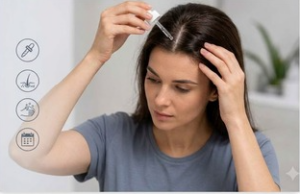 Minoxidil for women is also the first-line licensed treatment for female pattern hair loss. Women usually experience diffuse thinning across the top of the scalp rather than a receding hairline, making early treatment particularly beneficial.
Safety Considerations
Topical minoxidil is generally well tolerated. Possible side effects include mild scalp irritation, dryness or itching, temporary increased shedding during the first few weeks, and unwanted facial hair growth if the medication regularly runs onto the face. Women who are pregnant, planning pregnancy or breastfeeding should seek medical advice before using minoxidil.
Minoxidil Shampoo for Women: Does It Really Work?
Many shampoos are marketed as containing minoxidil. However, for the medication to be effective, it needs sufficient contact time with the scalp. Because shampoo is applied for only a few minutes before being rinsed away, there is limited evidence that it delivers meaningful clinical benefit for hair regrowth. Topical minoxidil remains the gold standard non-surgical treatment for women with female pattern hair loss.
Oral vs Topical Minoxidil: Which Is Better?
Topical Minoxidil
Topical treatment remains the first choice for most patients because it is supported by extensive clinical evidence, delivers medication directly to the scalp, has uncommon systemic side effects, and is widely available.
Oral Minoxidil
Low-dose oral minoxidil is increasingly prescribed by hair specialists for selected patients, although it is currently an off-label treatment for hair loss in the UK. It may be considered for people who cannot tolerate topical treatment or have not achieved sufficient benefit with topical therapy alone. Because oral minoxidil affects the whole body rather than just the scalp, it requires careful assessment before prescribing.
Minoxidil Alongside Other Treatments
For many patients, combining minoxidil with other treatments produces the best results. For men with androgenetic alopecia, minoxidil and finasteride are frequently used together because they work through different mechanisms. A combined minoxidil and finasteride topical solution is also available for suitable patients. Where stronger DHT suppression is needed, dutasteride may be considered alongside minoxidil.
How to Get Minoxidil at The Hairology Centre
At The Hairology Centre, we assess the underlying cause of your hair loss before recommending treatment. If you have already been diagnosed with genetic hair loss, you can fill in an online assessment form at treatments.hairologycentre.com and if appropriate, your minoxidil will be dispensed for you. Book a hair loss consultation at hairologycentre.