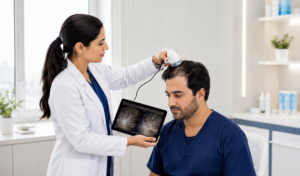
If you are experiencing hair loss, you may be wondering whether surgery is your only option. The answer is no. Many people achieve excellent results with non-surgical hair loss treatments, particularly when treatment begins during the early stages of thinning.
Non-Surgical vs Surgical: Why Non-Surgical Is Often the Smarter First Step
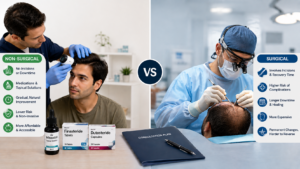
A hair transplant redistributes existing hair follicles. It does not stop the underlying cause of hair loss. Non-surgical treatments aim to preserve existing follicles, slow further hair loss and stimulate healthier hair growth. In many cases, they can significantly improve hair density without the cost, downtime or risks associated with surgery.
Non-Invasive Hair Loss Treatments
Minoxidil
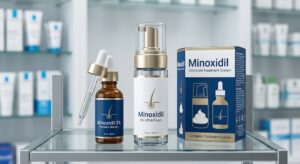
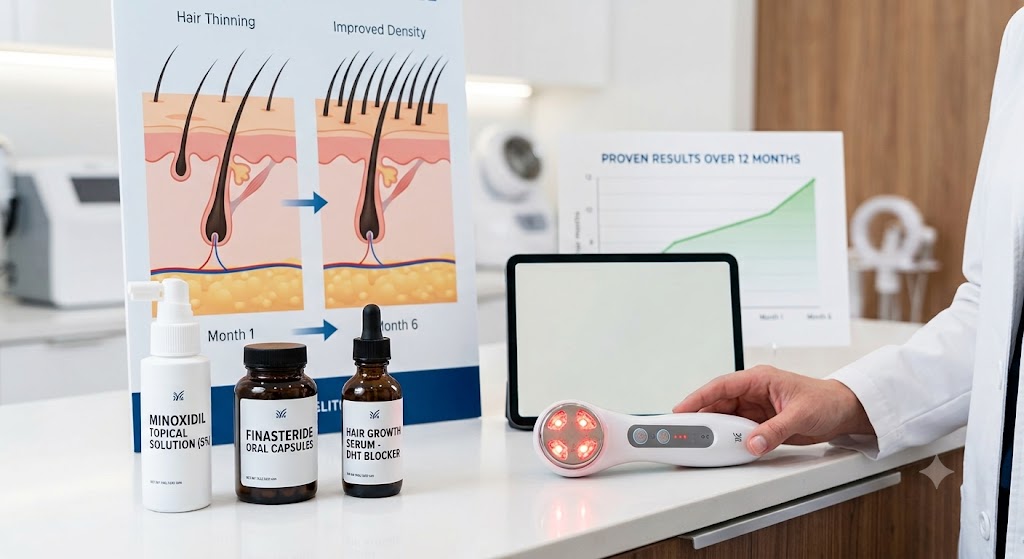
Minoxidil is one of the most widely studied hair loss treatments and is suitable for both men and women. Applied directly to the scalp, it helps prolong the hair growth phase and encourages thicker, healthier hair production. Minoxidil for women is available as a dedicated formulation, while a minoxidil and finasteride topical solution is available for suitable male patients.
Prescription Medication
Prescription medicines such as finasteride tablets can help men with androgenetic alopecia by reducing the effects of DHT. A finasteride topical solution is also available for men who prefer to avoid oral tablets. Where appropriate, dutasteride may be considered for patients requiring stronger DHT suppression.
Low-Level Laser Therapy (LLLT)
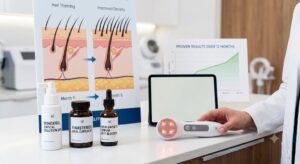
Low-level laser therapy uses specific wavelengths of light to stimulate hair follicles. It is painless, non-invasive and can be used alongside medical treatment for enhanced results.
Scalp and Hair Health Optimisation
Managing scalp inflammation, treating dandruff or other scalp conditions and addressing nutritional deficiencies where present can all support optimal hair growth. Natural hair loss treatments such as rosemary oil may also have a supportive role.
Personalised Combination Therapy
For many patients, combining treatments produces better results than relying on a single therapy. A tailored treatment plan may include medication, laser therapy and scalp care based on your diagnosis.
Non-Surgical Hair Restoration: What Realistic Results Look Like
A typical treatment timeline:
- First 2 to 3 months: Some people experience an initial increase in shedding as older hairs are replaced.
- Three to six months: Early improvements in hair quality and reduced shedding may become noticeable.
- Six to twelve months: Increased density and thicker hair are often seen.
- Beyond twelve months: Continued treatment helps maintain results and reduce further hair loss.
Consistency is key. Stopping treatment may allow the underlying hair loss process to resume, particularly in hereditary conditions.
Hair Transplant Alternatives: Who Are They Best For?
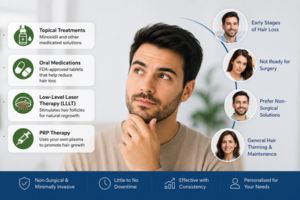
Non-surgical hair restoration is an excellent option for those who:
- Are in the early stages of hair thinning
- Have diffuse hair loss rather than isolated bald patches
- Are not suitable candidates for hair transplantation
- Prefer to avoid surgery, downtime or recovery
- Want to preserve their existing hair before considering a transplant
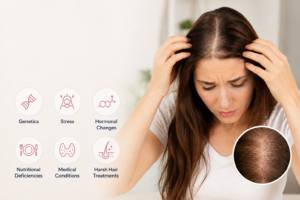
- Have temporary hair shedding caused by illness, stress, hormonal changes or nutritional deficiencies
How The Hairology Centre Approaches Non-Surgical Treatment
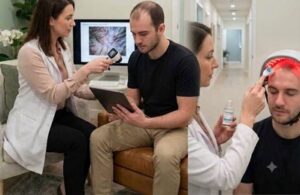
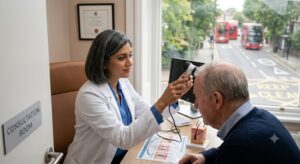
Every patient receives a comprehensive hair loss consultation, including a detailed medical history, scalp examination and advanced trichoscopy where appropriate. Book your consultation at hairologycentre.com/book-an-appointment/ or start with an online assessment at treatments.hairologycentre.com.
Frequently Asked Questions
What is the most effective non-surgical hair loss treatment in the UK?
For hereditary pattern hair loss, treatments such as topical minoxidil, finasteride where appropriate, and low-level laser therapy have the strongest clinical evidence. A professional assessment is always the recommended starting point.
Can non-surgical hair restoration give the same results as a transplant?
Non-surgical treatments cannot create the same degree of hair density as a successful hair transplant. However, they can significantly improve hair thickness, slow progression and preserve existing density — often removing the need for surgery altogether.
What are the best non-invasive hair loss treatments for men?
For men with androgenetic alopecia, evidence-based options include topical minoxidil for men, finasteride tablets or topical finasteride, and low-level laser therapy. Combination treatment often produces the best outcomes.
Are hair transplant alternatives suitable for women?
Not always in the surgical sense. However, non-surgical alternatives including minoxidil for women and laser therapy are frequently appropriate and effective for female hair loss.
For more information visit our complete guide: Hair Loss Treatment UK: Your Complete Guide — hairologycentre.com/hair-loss-guide/