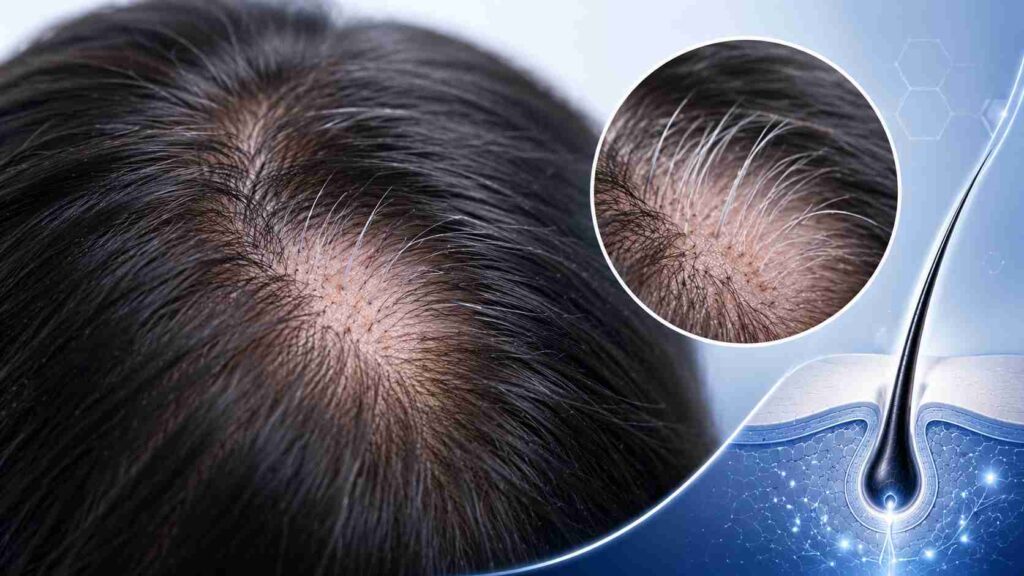
Yes — white hair regrowth in an area affected by alopecia areata is usually a positive sign.
In fact, white hair regrowth is often one of the earliest signs that the condition is improving and that the affected hair follicles are beginning to recover. While many people expect their normal hair colour to return immediately, it is actually very common for new hairs to grow back white, grey, or colourless at first.
Although this can be surprising, it does not mean the treatment is failing or that there is a new problem. Quite the opposite. In many cases, white regrowth indicates that the follicles have survived the autoimmune attack and are becoming active again.
Understanding why this happens can help reassure patients who are concerned when they first see these colourless hairs appearing. If you have been worried about your hair loss journey, this article explains what is happening and what to expect next.
Why Do White Hairs Grow Back First?
The explanation is actually quite simple.
Alopecia areata is an autoimmune condition. This means the immune system mistakenly attacks the hair follicles, causing hair to fall out. However, the immune system does not attack every part of the hair follicle equally.
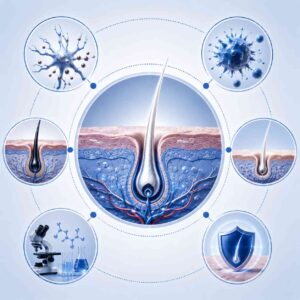
Hair gets its colour from specialised cells called melanocytes. These cells produce the pigment that gives hair its natural colour. Research suggests that the immune attack in alopecia areata tends to target follicles producing pigmented hairs more aggressively than follicles producing white or grey hairs. As a result, darker hairs are often more vulnerable to falling out.
When the condition begins to improve and the follicles start producing hair again, the pigment-producing cells may still be recovering. The follicle can start making a new hair before it has fully restored its ability to produce colour. The result is a new hair that grows back white.
In other words, the hair follicle is working again, but the colour-producing system has not yet fully restarted. This is why white regrowth is frequently seen during the recovery phase of alopecia areata.
What Happens Next? Will the Colour Return?

One of the most common questions patients ask at our hair loss clinic is whether the white hair will eventually return to its natural colour.
The answer is often yes, but not always.
As the hair follicle continues to recover, the melanocytes may gradually regain their function. When this happens, future hair growth starts producing pigment again and the hair begins to return to its previous colour. This process can take time.
For some people, colour begins returning within a few weeks or months of regrowth. For others, it may take considerably longer. The timeline depends on several factors, including:
- The severity of the alopecia areata
- How long the hair loss has been present
- Individual variation in follicle recovery
- Response to treatment
- Age and natural hair pigmentation
In many cases, patients first notice fine white hairs appearing within the bald patch. These hairs often become thicker and stronger over time. Eventually, some of them begin producing pigment again and blend in with the surrounding hair.
However, it is important to understand that not every white hair will regain colour. In some individuals, the regrown hair remains white permanently. Even in these situations, the presence of hair regrowth is generally considered a positive outcome because it demonstrates that the follicles remain active.
The primary goal is restoring hair growth. Hair colour often follows later. A hair loss consultation with a hair loss specialist can help you understand where you are in the recovery process.
What This Means for Your Treatment and Recovery
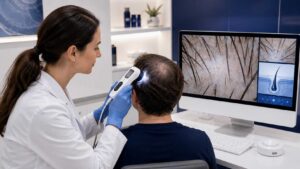
For most patients, white regrowth should be viewed as encouraging news.
One of the biggest concerns people have when living with alopecia areata is whether the hair follicles have been permanently damaged. Unlike some forms of hair loss, alopecia areata is a non-scarring condition, which means the follicles usually remain intact beneath the skin.
When white hairs start appearing, it suggests that those follicles are still capable of producing hair. This often indicates that:
- The immune attack is becoming less active
- The condition may be entering remission
- Treatment may be working
- The follicles are recovering their normal function
It is important not to become discouraged if the regrowth is initially thin, fine, or white. Recovery from alopecia areata is rarely an overnight process. Hair often returns gradually, with changes occurring over many months rather than weeks.
Many patients make the mistake of assuming that white regrowth means the treatment is not working because the hair does not yet look normal. In reality, white hairs are frequently one of the earliest and most reassuring signs that progress is being made.
This is why dermatologists and hair loss specialists generally view white regrowth as a positive clinical finding. The appearance of these hairs tells us that the follicles are responding and that the recovery process has begun.
Patients who also experience other types of hair loss may benefit from exploring non-surgical hair loss treatments or speaking with a hair growth specialist about whether additional medical treatment could support recovery.
Why Does Alopecia Areata Affect Hair Colour at All?
The answer lies in the close relationship between the immune system and pigment-producing cells.
Scientists believe that melanocytes may play a role in attracting the immune response seen in alopecia areata. Because these cells are involved in producing hair pigment, they appear to be particularly vulnerable during an active episode of the condition.
When the immune attack subsides, the follicle may recover more quickly than the pigment-producing cells inside it. As a result, the hair can grow before colour production has fully returned.
This unique characteristic is one reason why white regrowth has become such a recognised feature of alopecia areata recovery. It highlights the complex interaction between hair growth, pigmentation, and the immune system — a complexity that makes specialist guidance from a hair loss clinic all the more valuable.
For patients managing alopecia alongside other conditions such as hormonal imbalance and hair loss or female pattern hair loss, a personalised assessment ensures all contributing factors are considered.
Frequently Asked Questions
Will My Natural Hair Colour Come Back?
In many cases, yes. As the follicle continues to recover, pigment-producing cells may regain their function and future hairs can return with their original colour. However, some hairs may remain white permanently. A hair loss treatment consultation can help you understand what to expect based on your individual recovery progress.
Does White Hair Regrowth Mean the Treatment Is Working?
Often, yes. White regrowth is commonly considered a positive sign that the hair follicles are recovering and becoming active again. It frequently indicates that the immune attack has reduced and that hair growth is returning. This is the same reassuring pattern our hair loss specialist looks for when monitoring alopecia areata recovery.
What Should I Do Next?
The most important step is to continue following your treatment plan and attend any recommended follow-up appointments. Hair regrowth in alopecia areata can take time, and white hairs are often part of the normal recovery process. If you are unsure about your progress, you can book a hair loss consultation at The Hairology Centre or start with an online assessment for personalised advice.
What Hair Loss Treatments Support Alopecia Areata Recovery?
Treatment for alopecia areata varies depending on the severity and pattern. Some patients benefit from topical treatments including minoxidil topical solution to support regrowth. A specialist hair loss consultation at a dedicated hair loss clinic will determine which options are most suitable for your individual situation.
Is There a Hair Loss Specialist Near Me Who Treats Alopecia Areata?
The Hairology Centre is a specialist hair loss clinic with locations in Marlow and London. Our hair loss specialist Mandeep Matharu has extensive experience treating a wide range of hair loss conditions including alopecia areata. Remote online assessments are also available for patients across the UK.
Final Thoughts
Seeing white hairs grow back after alopecia areata can be surprising, but in most cases it is a reassuring sign.
Rather than indicating a new problem, white regrowth often shows that the affected follicles have survived the autoimmune attack and are beginning to function again. While the colour-producing cells may take longer to recover, the return of any hair growth is generally an encouraging step in the recovery process.
For many patients, white hairs are simply the first stage of the journey back to fuller hair growth. If you are at this stage and wondering what comes next, our hair loss specialist can help you understand your progress and explore any additional hair loss treatment options that may support your recovery.
For more information on hair loss causes and treatments, visit our complete guide: Hair Loss Treatment UK: Your Complete Guide