If you have noticed your hair getting thinner, you are far from alone. Hair thinning symptoms in women are incredibly common, and in most cases there are effective solutions. Whether the change has been gradual or you suddenly spotted more scalp in the mirror, thinning hair can feel worrying — but understanding what is happening is the first step toward getting back in control.
Hair thinning can happen at any age, and it does not always mean you are losing your hair. Often, the hair simply becomes finer, grows more slowly, or sheds more than usual for a period of time. The good news is that most causes of thinning are manageable, and many women see improvement once the underlying trigger is addressed.
The Most Likely Reasons Your Hair Is Thinning
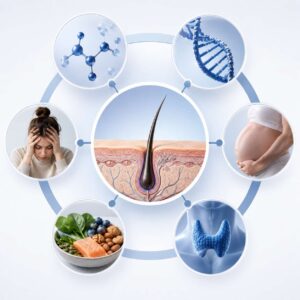
Women’s hair can thin for many reasons, but a few causes are especially common. These explanations are practical, everyday triggers and they reflect what many women experience at different stages of life.
Hormones Shifting Throughout Life
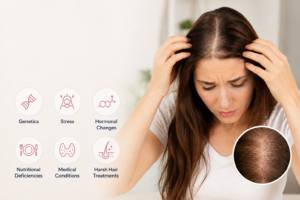
Hormones play a huge role in the hair growth cycle. When they fluctuate, hair often responds. Hormonal imbalance and hair loss is one of the most frequently discussed topics at The Hairology Centre.
Perimenopause and menopause: Oestrogen levels fall, and this hormone normally helps keep hair in its growth phase for longer. As levels drop, hair may become finer and shed more easily.
Thyroid changes: Both underactive and overactive thyroid function can affect hair density.
Stopping or starting hormonal contraception: Some women notice shedding a few months after a change in contraception.
Genetics
Female pattern hair loss (also called androgenetic alopecia) is one of the most common causes of gradual thinning. It tends to run in families and usually shows up as:
- A wider parting
- Reduced density on the crown
- Overall finer strands
It does not cause complete baldness, but it can noticeably reduce volume over time. Learn more: Genetic hair thinning in women
Post-Pregnancy Shedding
If you have had a baby in the last year, postpartum shedding is extremely common. During pregnancy, high hormone levels keep hair in its growth phase. After birth, those levels drop, and all the hair that was held in place sheds at once. It can feel dramatic, but it usually settles within several months.
Stress — Emotional or Physical
Stress does not have to mean a dramatic life event. Even everyday pressures can affect the hair cycle. Common triggers include illness, surgery, weight changes, high workloads, poor sleep, and emotional stress. This type of shedding (called telogen effluvium) usually appears 2 to 3 months after the stressful event and often improves once the trigger passes.
How to Tell If Your Thinning Is Getting Worse
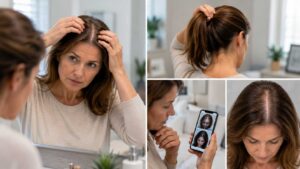
You do not need specialist tools to keep an eye on your hair. A few simple self-checks can help you understand whether your thinning is stable, improving, or progressing.
Check Your Parting
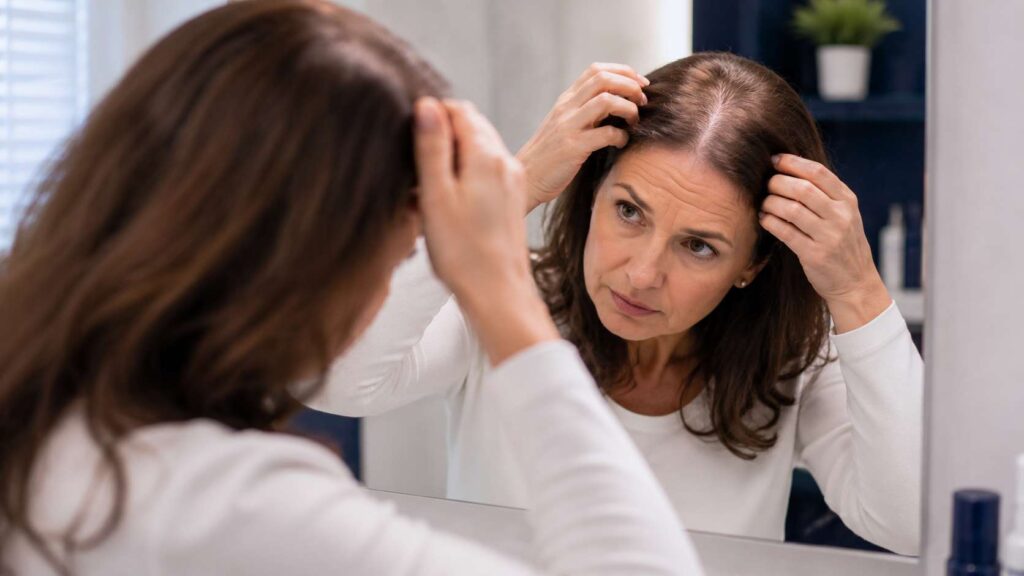
Stand in natural light and look at your parting in the mirror. If it appears wider than it used to, or the scalp is more visible, this can be a sign of reduced density.
Look at Old Photos
Comparing your hairline or crown in photos taken months or years apart can reveal gradual changes you may not notice day to day.
Pay Attention to Shedding
It is normal to lose 50 to 100 hairs a day. What matters is whether your shedding has increased compared to your usual amount. More hair in the shower drain, on your pillow, or in your brush can indicate a shift in the hair cycle.
The Ponytail Test
If you regularly tie your hair back, notice whether your ponytail feels thinner or the elastic wraps around more times than before.
Check for Shorter, Finer Regrowth
If new hairs feel wispy or do not seem to grow past a certain length, this may suggest the growth phase is shortening.
What You Can Do About It — Treatment Options for Women
The right approach depends on the cause, but many women see improvement with a combination of lifestyle changes, topical treatments, and professional support. Below are general options to help you understand what is available as hair thinning solutions for women.
Topical Treatments
Topical solutions are often the first step for women experiencing thinning.
Minoxidil: Minoxidil for women is widely used for female pattern thinning. It helps extend the growth phase of hair. A dedicated minoxidil topical solution is also available for suitable patients. Minoxidil shampoo for women can also be used as a supportive option alongside topical treatment.
Prescription topical treatments: Some clinics offer compounded formulas designed specifically for women. A finasteride topical solution may be considered in certain cases following specialist assessment.
Lifestyle and Nutritional Support
Hair needs adequate nutrients to grow well. While supplements are not a cure-all, they may help if you are low in certain vitamins or minerals. General areas to consider include iron levels, Vitamin D, protein intake, and Omega-3 fatty acids. A hair loss specialist can help assess whether deficiencies may be contributing.
Stress Management
Because stress can disrupt the hair cycle, supporting your overall wellbeing can help hair return to its normal rhythm. This might include sleep routines, gentle exercise, mindfulness, or simply reducing unnecessary pressure where possible.
Scalp Care
A healthy scalp creates the best environment for hair to grow. Gentle exfoliation, avoiding harsh styling, and reducing heat damage can all support healthier-looking hair.
Professional Treatments
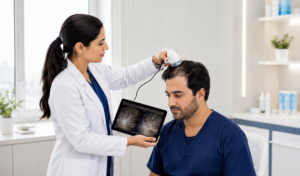
A specialist hair loss clinic may offer treatments such as platelet-rich plasma (PRP), low-level laser therapy, and prescription medications depending on suitability. These options should always be discussed with a qualified hair growth specialist before starting.
Women who want to avoid surgery will find that non-surgical hair restoration and non-invasive hair loss treatments can deliver meaningful results. Some women also explore natural hair loss treatments such as rosemary oil as a supplementary option.
When to See a Specialist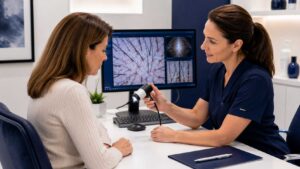
It is a good idea to speak with a hair loss specialist or healthcare professional if:
- Your thinning is progressing quickly
- You notice bald patches
- Your scalp is itchy, painful, or inflamed
- You have had thinning for more than six months
- You are unsure of the cause
- You are considering prescription treatments
A specialist can help identify the underlying trigger and discuss suitable options based on your individual situation. You can book a hair loss consultation at The Hairology Centre or start with an online assessment.
Frequently Asked Questions
Will My Hair Grow Back?
In many cases, yes. If thinning is caused by stress, illness, postpartum changes, or temporary hormonal hair loss, hair often regrows once the trigger settles. Female pattern hair loss can be managed, but it usually requires ongoing treatment to maintain results.
Is Hair Thinning Permanent?
Not always. Some types of thinning are temporary, while others, like genetic thinning, tend to be long-term but manageable. A hair loss treatment consultation can help determine which applies to you.
What Treatment Works Best for Women?
There is no single best treatment for every woman. Minoxidil for women, lifestyle support, and professional therapies can all play a role depending on the cause. A healthcare professional can help guide you toward the most appropriate options. You can explore women’s hair loss treatments in detail on our website.
What Are the Best Hair Loss Solutions for Women?
The best hair loss solutions for women include minoxidil topical solution, prescription topical treatments, and hormonal management where appropriate. Women experiencing hair loss treatment for women should always seek a professional assessment first to confirm the underlying cause.
What About Hair Loss Medication for Women in the UK?
Several hair loss medication options are available for women in the UK, including prescription minoxidil and, in some cases, topical finasteride. The best hair loss treatment UK options for women depend on individual diagnosis and should always be prescribed by a qualified specialist.
For more information on hair loss causes and treatments, visit our complete guide: Hair Loss Treatment UK: Your Complete Guide