
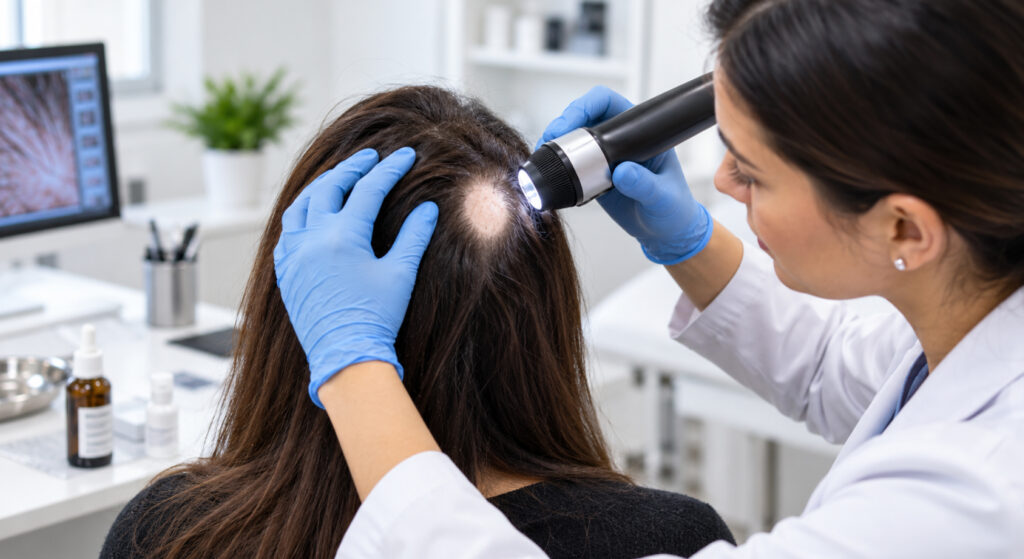
Alopecia areata is a condition that causes hair to fall out in small, often round patches. It can affect anyone, including men, women and children, and may involve the scalp, eyebrows, eyelashes, beard or other areas of the body. Understanding the causes of alopecia areata, its symptoms and available treatments can help you seek appropriate support.
What Is Alopecia Areata?
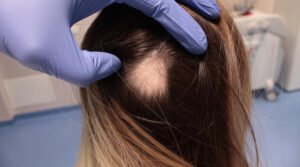 Alopecia areata is an autoimmune condition. This means the immune system mistakenly targets healthy cells in the hair follicles, disrupting normal hair growth.
Unlike some forms of scarring alopecia, alopecia areata does not usually permanently destroy the hair follicle. This means that regrowth may be possible, although the course of the condition can vary considerably.
Hair loss may occur suddenly, with one or several bald patches developing over a short period. In some cases, the condition may become more extensive and affect most or all of the scalp hair or body hair.
Causes of Alopecia Areata
The exact cause of alopecia areata is not fully understood. However, genetics and immune system activity are thought to play important roles.
People with a family history of alopecia areata or other autoimmune conditions may have an increased risk. Certain environmental factors, illness or emotional stress may also act as triggers in some individuals, although stress is not considered the sole cause.
Alopecia areata is not caused by poor hygiene, wearing hats or washing your hair too often. It is also not contagious and cannot be passed from one person to another.
Symptoms: What Does Alopecia Areata Look Like?
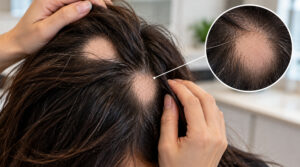 The most recognisable symptom is one or more smooth, clearly defined bald patches. These patches commonly appear on the scalp but may also affect the:
- Eyebrows
- Eyelashes
- Beard
- Arms and legs
- Other areas of body hair
Some people notice short, tapered hairs around the edges of a patch. These are sometimes called “exclamation mark” hairs. Nail changes, such as small dents or ridges, can also occur in some patients.
Alopecia areata is usually not painful, although some people report itching, tingling or sensitivity before hair loss develops.
Treatment Options in the UK
Treatment depends on the person’s age, the extent of hair loss, how quickly it is progressing and whether the eyebrows, eyelashes or other areas are affected.
Corticosteroids
Corticosteroids may be prescribed to reduce inflammation and calm the immune response around the hair follicles. They may be applied topically or injected into affected areas, depending on the clinical situation.
Minoxidil
Minoxidil may sometimes be recommended to support hair growth or maintain regrowth. It does not treat the underlying autoimmune process, so it may be used alongside other treatments rather than as a standalone solution.
JAK Inhibitors
JAK inhibitors are a newer treatment option for selected patients with more extensive alopecia areata. Medicines such as baricitinib and ritlecitinib have been used in appropriate clinical settings, subject to licensing, eligibility and prescribing guidance in the UK. Currently, hair loss of over 50% is needed before it can be prescribed on the NHS.
These medicines require careful assessment because they can have significant side effects, are taken long term and may not be suitable for everyone.
When Should You Seek a Specialist Assessment?
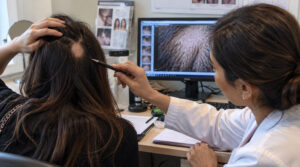 If you notice sudden bald patches, eyebrow or eyelash loss, rapidly progressing shedding or changes to your nails, arrange a professional assessment.
At The Hairology Centre, a consultation may include a detailed medical history, scalp examination and trichoscopic assessment. This helps distinguish alopecia areata from other causes of hair loss and allows suitable treatment options to be discussed.
Book your hair loss consultation today to explore your diagnosis and treatment options.
For more on the causes and types of hair loss, visit our hair loss guide.
Frequently Asked Questions
Will Alopecia Areata Grow Back on Its Own?
It can. Some people experience spontaneous regrowth without medical treatment, particularly when only a few small patches are present. However, regrowth is not guaranteed, and further patches may develop. Specialist advice can help assess the likely course.
Is Alopecia Areata Related to Stress?
Stress may act as a trigger for some people, but alopecia areata is primarily an autoimmune condition involving the hair follicles. It is not simply caused by stress, and people can develop it without experiencing any obvious stressful event.
Is Alopecia Areata the Same as Male Pattern Baldness?
No. Alopecia areata is an autoimmune condition that often causes sudden, smooth patches of hair loss. Male pattern baldness is usually linked to genetic sensitivity to DHT and commonly causes a receding hairline or thinning crown.
What Is the Best Treatment for Alopecia Areata in the UK?
There is no single treatment that is best for every patient. Options may include corticosteroids, minoxidil or JAK inhibitors, depending on the severity, location and progression of hair loss. A specialist assessment is important before choosing treatment.
Medical note: Treatments for alopecia areata should be selected following an appropriate clinical assessment. Prescription medicines may not be suitable for everyone.