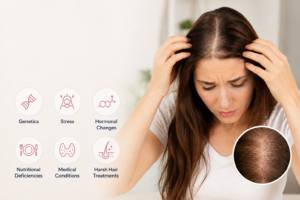
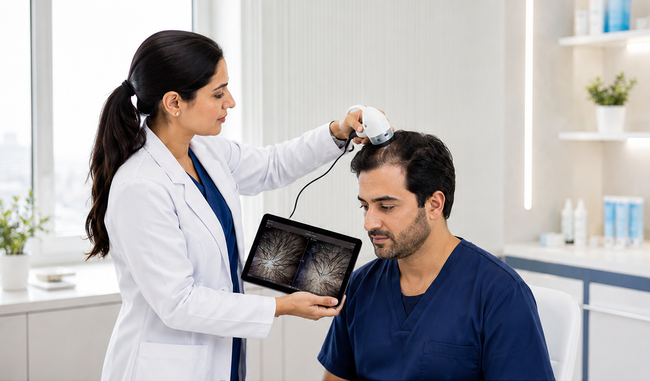
Hair loss is one of the most common concerns affecting men, with male pattern hair loss accounting for around 95% of cases. If you have noticed your hairline receding or your crown becoming thinner, the most important first step is understanding the cause before choosing a treatment.
Most Common Cause of Male Hair Loss
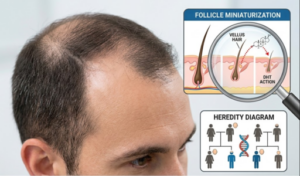
The most common cause of hair loss in men is androgenetic alopecia, also known as male pattern baldness. This inherited condition affects around half of all men by the age of 50 and often begins much earlier.
Male pattern hair loss occurs because certain hair follicles are genetically sensitive to dihydrotestosterone (DHT). Over time, DHT causes susceptible follicles to shrink in a process known as miniaturisation. Typical signs include:
- A receding hairline
- Thinning at the crown
- A widening area of hair loss over the top of the scalp
- Gradual reduction in hair density
Because this process is progressive, treatment is most successful when started during the early stages, before follicles become permanently inactive.
Hair Loss Solutions for Men: Clinically Proven Options
Finasteride
Finasteride tablets are a prescription-only medication that lowers DHT levels in the scalp. By reducing the hormone responsible for follicle miniaturisation, finasteride can significantly slow hair loss and help stabilise density. A finasteride topical solution is also available for men who prefer to avoid oral tablets.
Minoxidil
Topical minoxidil for men is available without a prescription and is suitable for many men experiencing thinning hair. It works by prolonging the hair growth cycle and increasing blood supply around the follicle.
Low-Level Laser Therapy (LLLT)
Low-level laser therapy uses specific wavelengths of light to stimulate hair follicles and improve cellular activity within the scalp. Clinical studies have shown improvements in hair density and thickness, particularly when used alongside medical treatment.
Combination Treatment
For many patients, the most effective results come from combining treatments rather than relying on one therapy alone. A minoxidil and finasteride topical solution is also available, combining both active ingredients in a single application.
Hair Thinning Solutions for Men
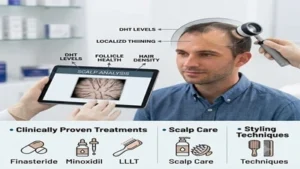
Hair thinning is often the earliest sign of male pattern hair loss. Early-stage hair thinning solutions for men include:
- Prescription medication to reduce DHT
- Topical minoxidil to support hair growth
- Low-level laser therapy
- Optimising scalp health
- Identifying contributing factors such as stress, nutritional deficiencies or medical conditions
What to Avoid: Products and Scams That Do Not Work
Be cautious of: miracle shampoos claiming to regrow hair, supplements marketed without evidence of a deficiency, herbal remedies with no clinical research, social media products promising permanent regrowth, and clinics offering guaranteed results.
How to Start at The Hairology Centre

Every successful treatment begins with understanding the cause of your hair loss. At The Hairology Centre, we provide comprehensive hair and scalp assessments. Book a hair loss consultation at hairologycentre.com/book-an-appointment/ or start with an online assessment at treatments.hairologycentre.com.
Frequently Asked Questions
What is the best hair loss treatment for men in the UK?
For male pattern baldness, finasteride tablets and minoxidil topical solution have the strongest clinical evidence.
Can hair thinning in men be reversed?
In many cases, yes. If treatment is started early while hair follicles are still active, it is often possible to slow progression and improve hair density.
At what age should men start treating hair loss?
Treatment should begin as soon as persistent thinning or a receding hairline becomes noticeable and male pattern hair loss has been diagnosed. Many men first seek treatment in their 20s and 30s.
What hair thinning solutions work fastest for men?
Minoxidil may produce early signs of improvement within three to six months. Finasteride generally requires at least six months before meaningful improvements become visible. Combining both treatments often produces better results than either alone.
For more information visit our complete guide: Hair Loss Treatment UK: Your Complete Guide — hairologycentre.com/hair-loss-guide/