
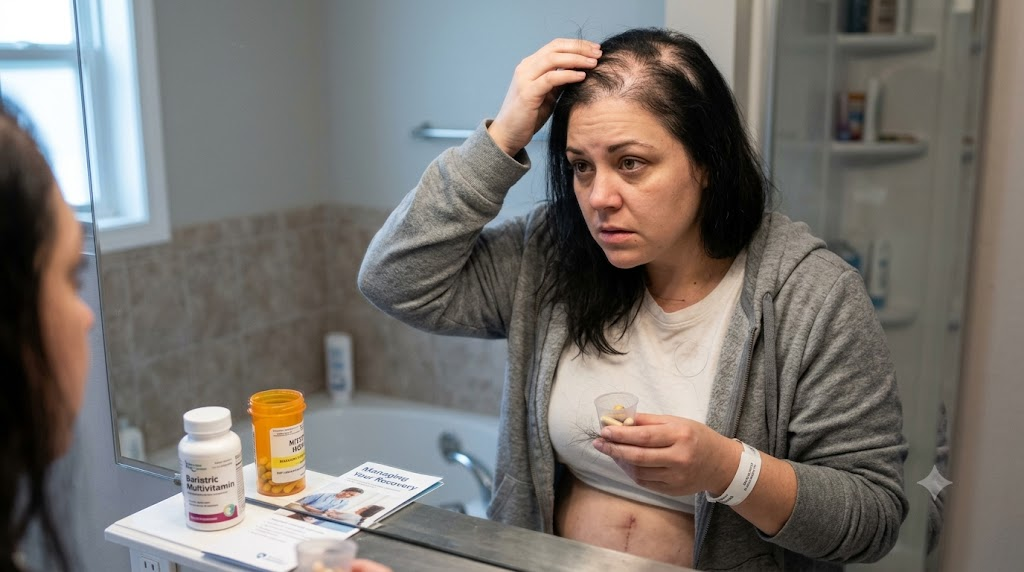
Seeing more hair in your brush or shower after weight loss surgery can be worrying, but it’s a common part of recovery for many people. Hair shedding usually starts around three to six months after procedures such as gastric bypass or gastric sleeve surgery as your body adjusts to rapid weight loss, hormonal changes and reduced nutrient intake. In most cases, the hair regrows over time.
Why Does Hair Loss Happen After Weight Loss Surgery?
Hair loss after weight loss surgery is usually caused by telogen effluvium, a temporary stress response that pushes more hair follicles than usual into the resting phase of the hair growth cycle. At the same time, changes in nutrition and nutrient absorption can make shedding more noticeable. Although it can feel alarming, it is a well-recognised part of recovery for many patients.
Telogen Effluvium and Rapid Weight Loss
Telogen effluvium happens when a shock, such as surgery or sudden calorie restriction, pushes many follicles into shedding at once. As the British Association of Dermatologists explains, it typically starts around twelve weeks after the trigger, which is why shedding appears months later rather than straight away.
Nutritional Deficiencies Linked to Hair Loss
Weight loss surgery changes how nutrients are absorbed, and several are essential for hair growth. Nutritional deficiencies that may contribute to hair loss include:
- Low iron, which reduces oxygen supply to follicles
- Insufficient protein, hair’s main building block
- Low zinc and vitamin D
- Reduced vitamin B12
These deficiencies do not affect everyone, but identifying and correcting them early can support healthy hair regrowth. NICE guidance on bariatric aftercare recommends lifelong nutritional monitoring, so regular blood tests matter as much as any treatment you try.
How to Recognise the Signs of Post-Surgery Hair Thinning
Signs of post-surgery hair thinning include increased shedding, a widening parting, and hair that feels less dense. Female patients, the majority of weight loss surgery patients, often notice these hair-thinning symptoms first around the hairline and crown.
Signs to Look Out For
- More strands than usual on your pillow, brush, or in the shower
- A widening parting or thinner ponytail
- Visible scalp, particularly at the crown
- Hair that feels less dense than usual.
When It May Signal Something More
Shedding beyond twelve months, defined bald patches, or symptoms such as fatigue may point to something beyond typical post-surgery shedding, worth raising with your GP.
How Long Does Hair Loss Last After Weight Loss Surgery?
Hair loss after weight loss surgery typically begins around three months after the procedure, peaks by six months, and improves within six to twelve months as nutrient levels stabilise. Full regrowth can take up to eighteen months, so patience matters as much as any product you use.
What Are the Best Hair Loss Solutions After Weight Loss Surgery?
The best hair loss solutions after weight loss surgery combine correcting nutritional gaps, evidence-based medication where appropriate, and a professional assessment.
Natural Hair Loss Treatments and Nutritional Support
Natural hair loss treatments centre on giving your body what it needs to rebuild follicles: hitting your surgical team’s protein targets, taking prescribed supplements consistently, and avoiding tight styles or excessive heat while your hair recovers.
Hair Loss Medication UK: What’s Available
Hair loss medication UK options include topical minoxidil, available over the counter and licensed to support regrowth. Finasteride is prescription-only, licensed for men, and unsuitable for female pattern hair loss. Since bariatric surgery can affect how well your body absorbs nutrients and oral medications, discuss any supplements or tablet-based treatments with your hair loss specialist first.
Professional Treatments from a Hair Loss Specialist
A hair growth specialist can run a trichology assessment, review your blood results alongside your surgical history, and build a plan suited to your pattern of hair loss.
Depending on the cause of your hair loss, one or more of the following approaches may be recommended.
Approach | What It Involves | Best Suited For |
Natural and nutritional | Protein, iron, zinc, vitamin D, gentle hair care | Everyone recovering from surgery |
Topical medication | Minoxidil applied to the scalp | Those wanting to support regrowth speed |
Specialist assessment | Blood tests, trichology review, personalised plan | Shedding beyond six months or severe cases |
When Should You See a Hair Loss Specialist?
See a hair loss specialist if your hair loss does not seem to be following the usual pattern of post-surgery shedding, including if:
- Shedding has not improved after a year.
- Hair loss appears in patches rather than diffusely.
- You notice fatigue, brittle nails, or skin changes alongside the hair loss.
- You want a personalised plan, not trial and error, from a hair loss specialist.
Take the Next Step With The Hairology Centre
If you’re concerned about ongoing hair loss after weight loss surgery or simply want reassurance that your recovery is on track, we’re here to help. Our specialists can assess your hair and scalp, review any relevant blood test results, and recommend a personalised treatment plan based on the underlying cause of your hair loss.
Book a consultation today and take the first confident step towards fuller, healthier hair.
Frequently Asked Questions
- Is hair loss normal after weight loss surgery?
Yes. Research suggests up to half of patients experience some hair loss after bariatric surgery, most often as telogen effluvium linked to rapid weight loss.
- How long does hair loss last after weight loss surgery?
Most patients see improvement within six to twelve months, with full regrowth taking up to eighteen months.
- Can hair loss after weight loss surgery be prevented?
It cannot always be fully prevented, but meeting protein targets and attending follow-up blood tests can reduce its severity.
- Will my hair definitely grow back?
In most cases, yes. Once your body has recovered and any nutritional deficiencies have been addressed, the hair growth cycle usually returns to normal.
5. When should I worry about hair loss after weight loss surgery?
If shedding continues beyond twelve months, occurs in patches, or comes with symptoms such as fatigue, seek a specialist assessment.