
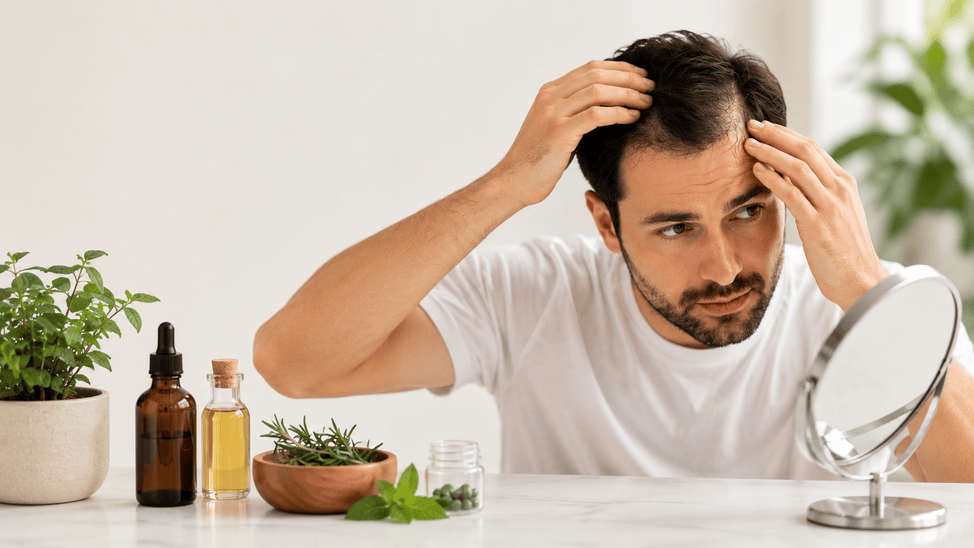
Natural hair loss treatments are everywhere, from rosemary oil and biotin supplements to scalp massages and herbal tonics. With so much noise online, it is genuinely difficult to separate what works from what simply sounds convincing. This blog cuts through the claims and looks at what the evidence actually supports, so you can make informed decisions about your hair, rather than expensive ones based on hope alone.
What Counts as a Natural Hair Loss Treatment?
Natural treatments refer to non-pharmaceutical approaches that aim to slow shedding, support the scalp environment, or stimulate hair growth without prescription medication. They are widely appealing because they feel low-risk, accessible, and aligned with a more holistic approach to health. However, “natural” does not automatically mean effective, and it certainly does not mean without limitation.
What Does the Evidence Actually Show?
Some natural hair loss treatment approaches do have credible research behind them, though the quality and scale of evidence vary. Here is an honest breakdown of the most commonly discussed options.
Rosemary Oil
One of the better-supported natural options available:
- A 2015 trial in the SKINmed Journal found rosemary oil comparable to 2% minoxidil over six months.
- Less scalp itching was reported compared to the minoxidil group.
- Thought to improve microcirculation to the follicles.
- Promising, but larger trials are still needed.
Nutritional Supplements
Deficiencies in key nutrients are a well-established driver of hair thinning:
- Low iron, ferritin, vitamin D, and zinc are all linked to increased shedding.
- The NHS recognises nutritional deficiency as a genuine cause of hair loss.
- Correcting a confirmed deficiency can support regrowth meaningfully.
- Supplementing without a diagnosed deficiency offers little benefit; always get blood work done first.
Scalp Massage
Low-risk and backed by early research:
- A 2016 ePlasty study found standardised scalp massage increased hair thickness over 24 weeks.
- Thought to work by improving blood flow to the dermal papilla cells.
- A useful supporting habit, not a standalone solution.
Pumpkin Seed Oil
An emerging option with early-stage evidence:
- A 2014 trial found that pumpkin seed oil supplementation led to a 40% increase in hair count over 24 weeks in men with androgenetic alopecia.
- Thought to inhibit 5-alpha reductase, an enzyme linked to hormone-driven hair loss.
- Research in women remains limited.
Where Natural Treatments Have Their Limits
Natural treatments can support a healthy scalp environment and may help in mild or early-stage cases. They are not, however, a substitute for clinical intervention where hair loss has a medical root cause.
If your hair loss is linked to hormonal imbalance, autoimmune activity, or scarring alopecia, no amount of rosemary oil or biotin will address what is happening at a physiological level. Identifying the underlying cause is essential before choosing the most appropriate treatment pathway.
Non-invasive hair loss treatments and clinically approved topical options sit in a middle ground, offering evidence-based results without the need for surgery, and are worth considering alongside or instead of purely natural approaches.
When to Speak to a Hair Loss Specialist
If shedding has been consistent for more than three months, natural treatments alone are unlikely to be enough. A hair loss specialist can carry out a thorough clinical assessment, identify whether hair loss medication in the UK is appropriate for your situation, and build a treatment plan based on diagnosis rather than guesswork.
A hair loss consultation is not a commitment to any particular course of action. It is simply the most reliable way to understand what is actually driving your hair loss and what will genuinely help.
Find the Right Hair Loss Treatment for You
The most effective approach to hair loss combines evidence with expertise. At The Hairology Centre, every consultation begins with understanding your hair, your health history, and your goals. Whether natural treatments are part of your journey or a clinical pathway is more appropriate, we will give you clarity, not just a product to try.
Book your hair loss treatment consultation today and get answers grounded in evidence, not trends.
Frequently Asked Questions
- Do natural hair loss treatments actually work?
Some do, to a degree. Rosemary oil, correcting nutritional deficiencies, and scalp massage all have varying levels of evidence supporting their use. However, their effectiveness depends heavily on the cause of your hair loss, which is why professional assessment matters.
- Is rosemary oil as effective as minoxidil for hair loss?
A 2015 study found rosemary oil comparable to 2% minoxidil over six months in a small trial. It shows genuine promise, but the evidence base is not yet large enough to recommend it as an equivalent to clinically approved hair loss medication in the UK.
- Can vitamins and supplements stop hair loss?
If your hair loss is caused by a specific nutritional deficiency, correcting it through diet or supplements can help. Taking supplements without a confirmed deficiency, however, is unlikely to make a meaningful difference and should be guided by a health professional.
- When should I stop trying natural treatments and see a specialist?
If you have been using natural treatments consistently for three months without improvement, or if your shedding is significant and worsening, it is time to book a hair loss treatment consultation. Early intervention gives you the best range of options.
5. Are non-invasive hair loss treatments better than natural ones?
Non-invasive hair loss treatments such as low-level laser therapy and clinically approved topicals are generally better evidenced than most natural remedies. They offer a middle ground between home-based approaches and surgical options and are often used alongside clinical treatment plans.
6. What is the best first step if I am experiencing hair loss?
The best first step is a professional hair loss consultation. A hair loss specialist can identify the cause, assess your scalp, and recommend the best hair loss solutions for your specific situation, rather than a generic off-the-shelf approach.