
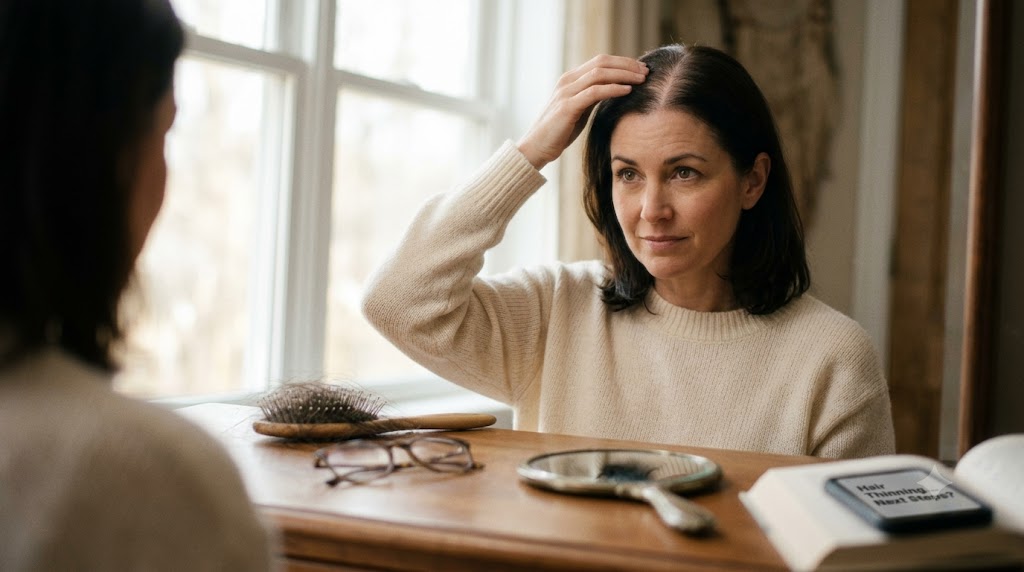
Hair thinning affects millions of women across the UK, yet it remains one of the most under-discussed health concerns women face. It can creep up slowly, affecting your confidence long before you feel ready to address it. If you have noticed more hair on your pillow, a widening parting, or a ponytail that feels noticeably thinner, your body may be trying to tell you something worth listening to.
The good news is that understanding what is happening is the most empowering thing you can do. In this blog, we will walk you through the key hair thinning symptoms in females, the most common causes, and exactly what your next steps should be.
Recognising Hair Thinning Symptoms in Women
The earlier you spot the signs, the more options you have. Hair thinning symptoms in females tend to develop gradually, which is precisely why so many women dismiss them until significant change has already occurred.
What Does Female Hair Thinning Actually Look Like?
It rarely looks like the dramatic patches associated with male hair loss. Instead, women typically experience:
- A widening centre parting or thinning at the crown.
- Increased shedding during washing or brushing.
- A noticeably lighter, finer ponytail.
- Visible scalp under bright light.
- Reduced volume across the whole head.
According to the NHS, it is normal to lose between 50 and 100 hairs per day. Anything beyond that warrants a closer look.
What Causes Hair Thinning in Women?
Hair loss in women almost always has an underlying cause. Identifying it is the foundation of any effective treatment.
Hormonal Imbalance and Hair Loss
This is one of the most frequently overlooked triggers. Hormonal imbalance and hair loss are closely linked, particularly during perimenopause, post-pregnancy, thyroid dysfunction, and conditions such as polycystic ovary syndrome (PCOS). Fluctuating oestrogen and androgen levels can disrupt the hair growth cycle, leading to increased shedding and gradual thinning in some women.
Other Common Triggers
- Nutritional deficiencies, particularly iron, ferritin, and vitamin D.
- Chronic stress and physical illness.
- Certain medications, including some contraceptives.
- Rapid weight loss or restrictive diets.
- Autoimmune conditions such as alopecia areata.
What Should You Do Next?
Doing nothing is the one thing most likely to make the situation worse. Hair follicles that go untreated for too long can become permanently inactive.
When to See a Hair Loss Specialist
If shedding has continued for more than three months, or you can visibly see scalp where you could not before, it is time to book a hair loss consultation. A qualified hair loss specialist will carry out a thorough scalp assessment, identify the root cause, and build a treatment plan around your specific needs, not a generic protocol.
Finding the Right Female Hair Loss Treatment
Hair thinning is not something you should ignore or simply accept as inevitable. Whether your symptoms are linked to hormonal changes, nutritional deficiencies, or another underlying cause, an early assessment can help identify the reason behind your hair loss and the most appropriate treatment options.
At The Hairology Centre, we provide personalised assessments and evidence-based female hair loss treatments tailored to your individual needs.
If you are concerned about hair thinning, book a consultation with us today and get expert advice and personalised support.
Frequently Asked Questions
- What are the early signs of hair thinning in women?
An initial hair loss treatment consultation at a specialist clinic typically lasts between 45 minutes and one hour. This allows sufficient time for a thorough assessment, a detailed discussion of findings and a meaningful conversation about the options available to you.
- Can a hormonal imbalance cause hair thinning in women?
Yes. Hormonal imbalance and hair loss are strongly connected. Conditions such as PCOS, thyroid disorders, and the menopause transition are among the most common hormonal drivers of female hair thinning.
- At what age does hair thinning typically begin in women?
Hair thinning can begin at any age, though it becomes more prevalent from the mid-thirties onwards, particularly around periods of hormonal change such as pregnancy or perimenopause.
- Is female hair thinning permanent?
Not necessarily. Many causes of hair thinning are reversible when caught early and treated appropriately. The sooner you seek a hair loss consultation, the better your chances of reversing or significantly slowing the process.
5. What is the best hair loss treatment for women in the UK?
The most effective approach is one tailored to your specific diagnosis. Evidence-based options include topical minoxidil, nutritional intervention, and hormone management. A specialist at a reputable hair loss clinic will advise on what is clinically suitable for you.
6. When should I be concerned about hair loss?
If you are losing more than 100 hairs per day consistently, noticing bald patches, or experiencing a visible reduction in density over several months, it is worth seeking a professional assessment rather than waiting.