
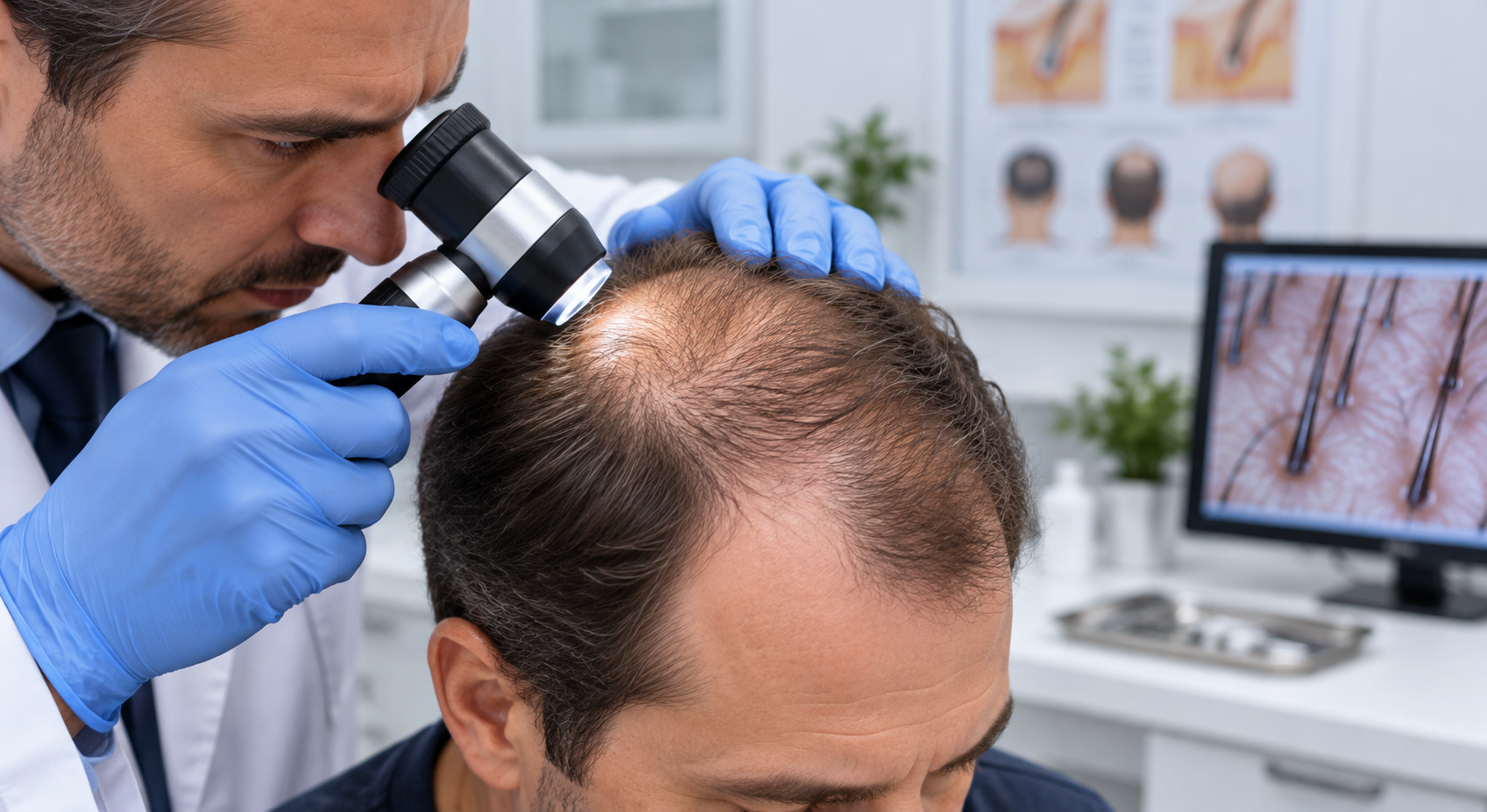
DHT hair loss happens when dihydrotestosterone, a hormone made from testosterone, gradually shrinks genetically sensitive hair follicles until they stop producing visible hair. If you have noticed your hairline slowly creeping back and wondered why, DHT is often part of the reason, and understanding what is happening can help you act sooner.
What Is DHT?
DHT, short for dihydrotestosterone, is an androgen, or male sex hormone, produced when the enzyme 5-alpha reductase converts testosterone. It has an important role in male development and body hair growth. In genetically sensitive scalp follicles, however, DHT can trigger follicle shrinkage instead. DHT binds to hair follicle androgen receptors about five times more strongly than testosterone.
How Does DHT Cause Hair Loss in Men?
The link between DHT and hair loss in men comes down largely to follicle sensitivity. Most men with pattern baldness have normal hormone levels, but their follicles respond more strongly to DHT.
The Role of 5-Alpha Reductase
Type 2 5-alpha reductase is an enzyme found in scalp hair follicles. It converts testosterone into DHT, which is why 5-alpha reductase hair loss treatments such as finasteride target the enzyme rather than DHT itself.
Follicle Miniaturisation
Miniaturisation is the gradual process in which affected follicles produce hairs that become thinner, shorter and lighter. According to the British Association of Dermatologists, the follicles can eventually shrink completely and stop producing hair.
Why Genetics Decide Who Is Affected
Genetics determine which follicles are sensitive to DHT, which is why pattern baldness usually runs in families, as the NHS notes. Hair at the sides and back is typically spared, as those follicles resist DHT.
Is All Male Hair Loss Caused by DHT?
No. DHT is closely linked to male pattern hair loss, but men can lose hair for other reasons too. Sudden shedding, patchy hair loss or changes to the scalp can have different causes and may need a different approach. If your hair loss does not follow the usual pattern, getting it assessed can help identify the cause before starting treatment.
Why Acting Early on DHT Hair Loss Matters
DHT hair loss is progressive, so treatment is generally more effective at protecting existing hair than restoring hair that has already been lost. Starting treatment earlier may mean:
- More hair left to protect
- Slower visible progression
- A wider choice of treatment options
How Can DHT Hair Loss Be Treated?
DHT hair loss can be treated by lowering DHT, stimulating hair growth, or using both approaches. NICE Clinical Knowledge Summaries lists finasteride and minoxidil as medicines available to men.
Treatments That Lower DHT
Finasteride is the licensed medicine that lowers DHT by mainly blocking type 2 5-alpha reductase. Benefits can take up to 14 months, and hair loss can resume when treatment is stopped. It is prescription only, and the MHRA has recommended a patient alert card highlighting possible mood and sexual side effects.
Treatments That Work Differently
Minoxidil works differently from finasteride. Rather than lowering DHT, it stimulates hair growth. It typically needs 6 to 12 months of consistent use before any benefit becomes apparent, and results last only while treatment is continued.
Get Expert Advice on DHT Hair Loss at The Hairology Centre
Hair loss can have several causes, so getting the diagnosis right is an important first step. At The Hairology Centre, our specialists assess your pattern and recommend a personalised, prescription-only treatment plan, so you can make an informed decision about your treatment.
If you are concerned about ongoing thinning, you can start an online assessment or book a consultation at our Marlow or London clinic.
Frequently Asked Questions
- What is DHT, and what does it do?
DHT (dihydrotestosterone) is a hormone made from testosterone by the enzyme 5-alpha reductase. It plays a role in male development, but in genetically sensitive scalp follicles it causes miniaturisation, leading to male pattern hair loss.
- Does high DHT always cause hair loss?
No. Most men with pattern baldness have normal hormone levels, and the deciding factor is how sensitive the follicles are to DHT, which is largely inherited.
- Can you block DHT to stop hair loss?
Lowering DHT can slow hair loss, and finasteride is the licensed medicine that does this by blocking type 2 5-alpha reductase. It requires a prescription and ongoing use to maintain results.
- How long do DHT treatments take to work?
Finasteride can take up to 14 months of continuous use before a benefit is usually seen, while minoxidil typically needs 6 to 12 months.
5. Do treatments that lower DHT have side effects?
Yes. Finasteride can cause reduced libido and erectile problems, reported in around 2% of users according to the British Association of Dermatologists, and the MHRA also flags depression and suicidal thoughts. Anyone who develops a low mood or sexual side effects should contact their prescriber promptly.
6. Is DHT hair loss permanent?
Male pattern hair loss has no cure, but it usually progresses slowly over years or decades, and treatment can slow it for as long as it is continued.